
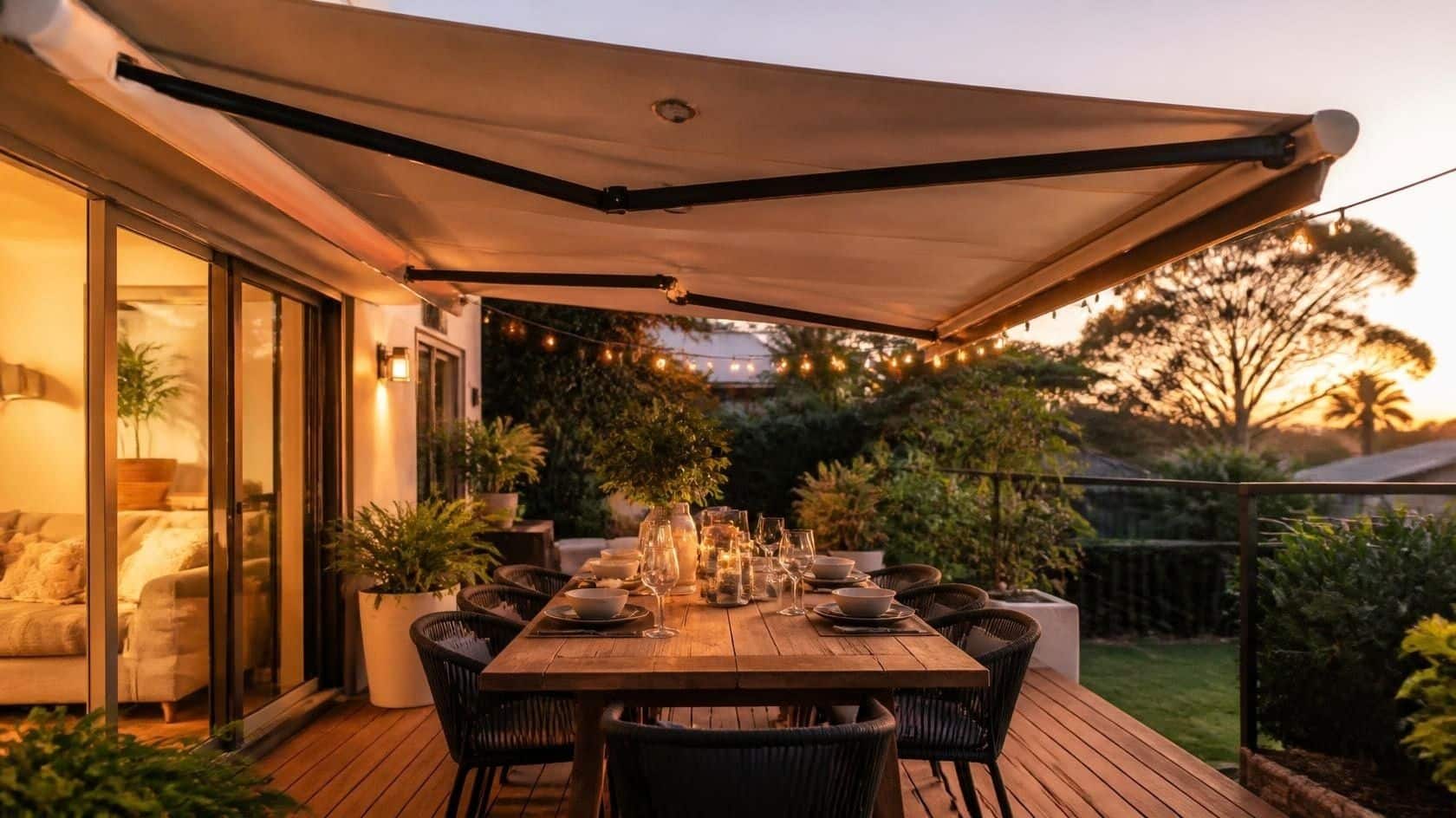
Patio awnings turn an exposed outdoor area into usable space year-round. They cut summer heat…

Window Awning Basics: What They Are and When to Use Them
A window awning is an exterior shade cover fitted above a window to block sun, heat, and rain. Brisbane homeowners use them to stay cooler, protect furnishings, and get more from their home — especially through long, hot summers.
What Is a Window Awning?
A window awning attaches to the exterior wall of your home, directly above a window opening. It shields that window — and the room behind it — from direct sunlight, rain, and heat. Think of it as a small roof built specifically for your window.

One common point of confusion is worth clearing up. A window awning is a shade structure fitted to the outside of your home. An awning window is a type of window frame that opens outward on a hinge at the top. They do two completely different jobs. It’s easy to mix them up when you first start researching your options.
Australian homes have featured window awnings for well over a century. In Brisbane, summers run long, the sun hits hard, and afternoon temperatures climb steadily. A reliable layer of shade over your windows makes a real difference to how comfortable your home feels day to day.
How a Window Awning Actually Works
The mechanics are simple — and that simplicity is part of what makes them so effective. The awning projects outward from the wall at an angle. It intercepts sunlight before it ever hits the glass. Because the sun stops before reaching the window, heat never enters the room in the first place.
This matters more than it might seem. Standard blinds and curtains sit on the inside of the window. By that point, solar heat has already passed through the glass. A window awning tackles the problem at the source. Many Brisbane homeowners notice a real drop in room temperature — especially in rooms that face west or north and catch direct afternoon sun.
Awnings also act as a barrier against light rain. You can keep windows open for fresh air during summer showers without water getting in. In Brisbane’s subtropical climate, that’s a genuinely useful advantage.
The Main Types of Window Awnings
Not every window awning works the same way. Understanding the options helps you choose something that suits both your home and your lifestyle.
Fixed Window Awnings
Fixed awnings mount permanently to the wall and stay in place year-round. They deliver consistent shade with no adjustment needed. That makes them ideal for windows that face direct sun throughout the day. They’re durable, need very little upkeep, and work well for homeowners who want a simple, set-and-forget solution.
Retractable Window Awnings
Retractable awnings give you flexibility. Extend them when you need shade. Pull them back when you don’t — for example, during cooler months when winter sun helps warm the home naturally. Manual versions use a hand crank or pull system. Motorised versions run with a remote or wall switch.
Motorised Window Awnings
Motorised awnings take convenience further. Many come with sensors that automatically retract the awning in strong winds or extend it when the sun reaches a certain intensity. For larger windows or hard-to-reach spots, motorised awnings remove the guesswork entirely and make daily operation effortless.
Key Benefits for Brisbane Homeowners
Window awnings solve real problems for Brisbane households. The benefits go well beyond basic shade.
Heat reduction comes first. Brisbane’s subtropical climate means high UV exposure for most of the year. West-facing rooms get uncomfortably hot without external shading. A well-positioned awning cuts the amount of heat entering through the glass. Your air conditioning works less hard as a result.
Interior protection is another advantage homeowners often overlook. Prolonged UV exposure fades upholstery, flooring, and soft furnishings over time. An awning blocks that UV consistently and extends the life of your interiors. That saves money on replacements down the track.
Curb appeal improves too. Modern fabric and aluminium awnings come in a wide range of colours and profiles. They complement almost any home style — from traditional Queenslanders to contemporary new builds — without looking out of place.
When Should You Use a Window Awning?
A few specific scenarios make a window awning a smart choice. If a room gets uncomfortably hot in the afternoon — particularly on the western or northern side of your home — external shading will help. If your furniture or flooring has started to fade near windows that get direct sun, an awning can stop further damage.

They also make sense if you want to keep windows open during Brisbane’s summer rain without water coming inside. And if rising energy bills concern you, awnings reduce your dependence on air conditioning during peak heat.
That said, they don’t suit every situation. Rooms facing south or receiving only indirect light won’t benefit as much. In those cases, exploring other awning types — such as folding arm awnings for outdoor areas or straight drop awnings for alfresco spaces — might deliver better results.
Choosing the Right Style for Your Home
A few key factors shape the right choice: which direction your windows face, how much flexibility you want, and the style of your home’s exterior.
Windows that need consistent protection suit a fixed awning best. If your needs shift with the seasons — and in Brisbane, they do — a retractable or motorised option gives you more control. Material matters too. Quality acrylic fabrics handle UV well and last. Powder-coated aluminium stands up to wind and rain with very little maintenance required.
Colour and profile should match your exterior. Modern awnings come in a broad range of finishes, so finding the right look isn’t difficult. Queenslanders, brick family homes, and contemporary builds all have options that work.
If you’re considering folding arm awnings for a patio or straight drop awnings for an outdoor entertainment area, these can combine with window awnings to create a fully shaded, year-round outdoor living space.
Complete Blinds Brisbane has helped homeowners across Brisbane find the right shading solutions since 1989. Our own experienced team handles every measure and installation — no sub-contractors — so the quality and finish will always be right.
Frequently Asked Questions
What is the difference between a window awning and an awning window?
A window awning is an external shade structure mounted above a window on the outside of your home. An awning window is a type of window frame that opens outward on a hinge at the top. They serve very different purposes — one provides shade and weather protection, the other is a style of openable window.
How much shade does a window awning actually provide?
The amount of shade depends on the projection length, the angle, and which direction your window faces. West- and north-facing windows benefit the most, and a properly sized awning can significantly reduce the amount of heat entering a room through the glass.
Do window awnings work in the rain?
Yes. Fixed and retractable awnings both act as a weather barrier, allowing you to keep windows open during light to moderate rain without water entering your home. Retractable awnings should generally be retracted during heavy storms or strong wind events.
What maintenance do window awnings require?
The level of upkeep depends on the material. Fabric awnings benefit from occasional cleaning to prevent mould or dirt buildup, particularly during Brisbane’s humid summer months. Aluminium awnings require very little maintenance and are a good choice for homeowners who prefer a low-effort option.
Can window awnings help reduce energy bills?
Yes. By blocking direct sunlight before it reaches the glass, window awnings reduce heat gain inside your home. This means your air conditioning doesn’t need to work as hard to maintain a comfortable temperature, which can contribute to lower energy costs over summer.

Related Posts


Comments (0)