
Patio awnings turn an exposed outdoor area into usable space year-round. They cut summer heat…

External Window Awnings: Heat and Glare Control for QLD Homes
External window awnings stop solar heat before it reaches your glass, making them significantly more effective than internal blinds for keeping Queensland homes cool. The right awning type, fabric, and window orientation together determine how much heat and glare you actually reduce.
External window awnings are shade structures mounted outside your windows that intercept solar radiation before it hits the glass. Once sunlight passes through glass, it converts to radiant heat inside the room — and internal blinds cannot reverse that process. Awnings prevent it from happening in the first place. According to YourHome.gov.au, the Australian Government’s passive design resource, well-designed external shading is one of the most effective strategies for controlling heat gain through windows, particularly on north, east, and west-facing elevations in Queensland.
Why External Shading Outperforms Internal Blinds for Heat Control
External awnings are more effective than internal window treatments for a straightforward reason. They act before the heat enters — not after.

When sunlight hits unprotected glass, the glass itself heats up and radiates warmth into the room. Internal blinds and curtains absorb some of this radiant heat, but the heat is already inside the building envelope. External awnings intercept direct solar radiation at the window’s exterior face. The glass stays cooler. The room stays cooler. Less work falls to the air conditioner.
The Window Shading Association of Australia identifies external shading as the primary means of reducing solar heat gain through windows in Australian homes. Research indicates that external awnings can reduce solar heat gain on west-facing windows by up to 77%. On north-facing windows, the reduction is significant too. For Queensland homeowners with summer electricity bills pushed up by continuous air conditioning, that reduction translates directly to running-cost savings across the warmer months.
Additionally, external awnings reduce UV exposure inside the home. Prolonged UV exposure fades carpets, timber floors, upholstery, and artwork. A quality awning fabric can block 90–98% of UV radiation reaching the window, extending the life of interior furnishings considerably.
Which Type of External Window Awning Suits Your Home?
External window awnings come in several configurations. The right type depends on your window size, wall height, desired flexibility, and architectural style.
Straight Drop Awnings
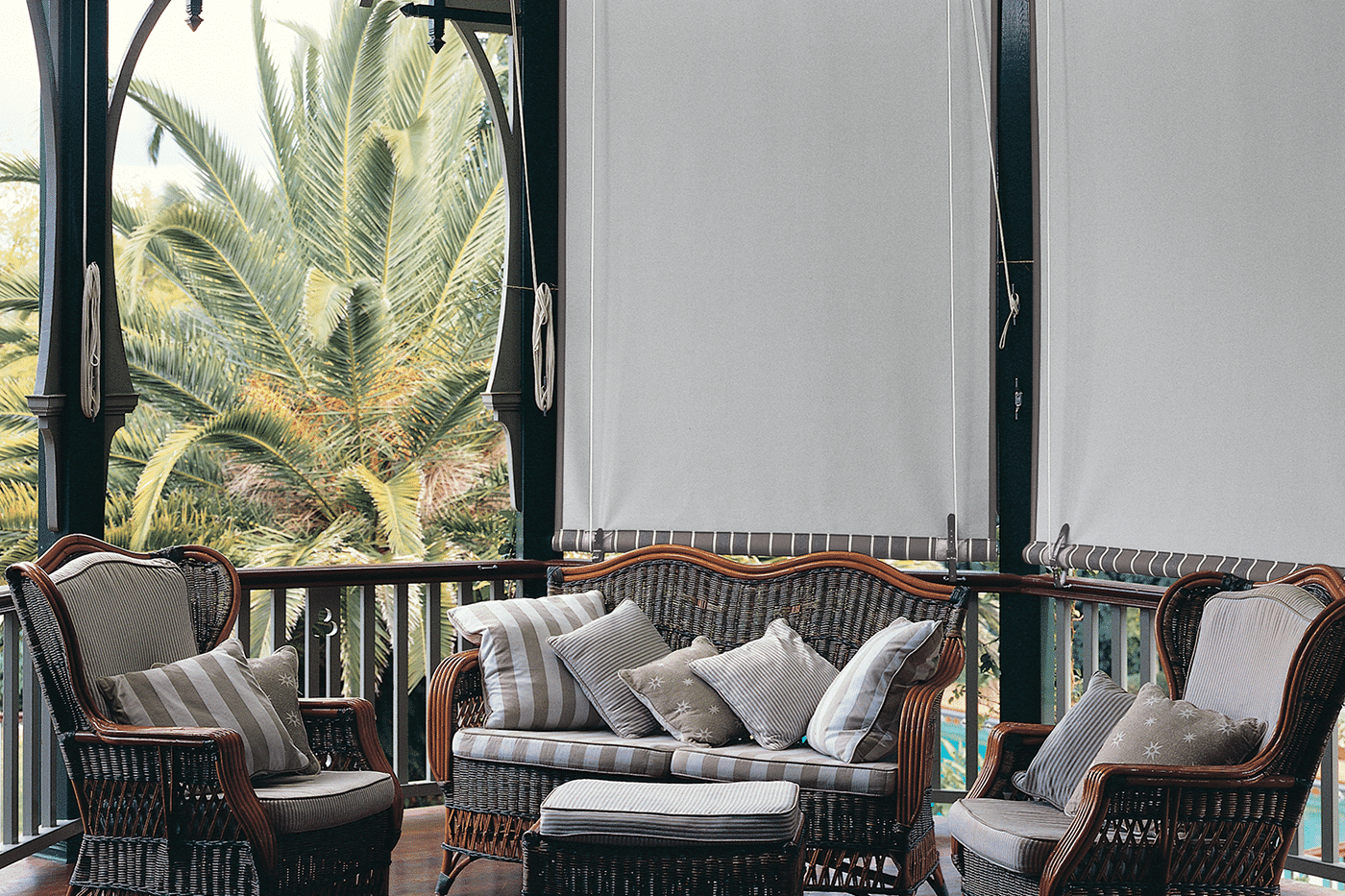
Straight drop awnings roll down vertically from a housing mounted above the window. They are the most practical choice for controlling low-angle sun — particularly afternoon sun on west-facing walls. When the sun is lower in the sky, a horizontal projection does little to block it. A vertical drop does. Straight drop awnings can be operated manually via rope and pulley, crank control, or cable guide. Motorised versions allow adjustment by remote or wall switch. At Complete Blinds Brisbane, straight drop awnings are among the most frequently specified products for Queensland homes facing west or north-west, where afternoon heat is most intense.
Pivot Arm Awnings
Pivot arm awnings project outward from the wall on angled arms. Unlike straight drop styles, they allow the window to remain open while providing shade — an important advantage in Queensland homes where cross-ventilation is valued. The angled projection shades overhead sun effectively, making them well suited to north-facing windows that receive sun throughout the day. The System 2000 pivot arm awning, available through Complete Blinds Brisbane, is designed and manufactured in Australia and suits both ground-floor and multi-storey applications.
Fixed Canopy and Aluminium Awnings
Fixed canopy awnings provide permanent overhead coverage using a rigid frame and fabric or aluminium panel. They require no operation — shade is consistent throughout the day without any adjustment. Aluminium awnings are particularly durable, requiring minimal maintenance in Queensland’s humid, UV-intense climate. They suit traditional Brisbane homes and work well over windows and doorways where consistent protection matters more than flexibility. The trade-off is that fixed awnings cannot be retracted in winter to allow warming sun into the home — something retractable styles manage easily.
What Fabric Should You Choose for a Queensland Awning?
Fabric choice is the most important performance decision after awning type. In Queensland conditions — intense UV, humidity, occasional storm events — not all fabrics perform equally over time.

Acrylic canvas is the premium choice for external awnings. It resists UV fading, repels light rain, and holds its colour and structural integrity far longer than untreated canvas. Solution-dyed acrylic, where colour is embedded through the fibre rather than applied to the surface, offers the strongest long-term colour retention in Queensland sun.
Mesh fabrics allow filtered light and some airflow to pass through the weave. They reduce heat effectively while maintaining outward views — a good option for ground-floor windows in street-facing positions where some visibility matters. Tighter weave densities provide more shade but reduce airflow.
PVC fabrics are waterproof and well suited to areas needing full rain protection. However, PVC retains more heat than breathable fabrics. In Queensland’s warm climate, this is worth factoring into any window-facing installation. Canvas and acrylic remain the better default for awnings positioned directly over frequently occupied rooms.
Does Awning Colour Affect Heat and Glare Performance?
Yes — and the answer is more nuanced than most homeowners expect.
Darker coloured awnings absorb more solar radiation than lighter ones. However, they also reduce glare more effectively because less reflected light bounces back through the window opening. Lighter colours reflect heat away from the fabric, keeping the awning itself cooler and reducing radiant heat from the awning’s underside into the room below.
For Queensland homes where minimising interior heat is the primary goal, a lighter colour with a tight-weave fabric is generally the better choice. Where glare is the dominant problem — such as a home office or reading room — a medium tone provides a practical balance between heat reflection and glare absorption. At Complete Blinds Brisbane, our consultants bring fabric samples directly to your home so you can see the light-filtering effect in your actual room before committing to a colour.
FREQUENTLY ASKED QUESTIONS
Do external window awnings actually reduce heat inside the home?
Yes — and more effectively than internal blinds. External awnings intercept solar radiation before it reaches the glass, preventing heat from entering the building. According to the Window Shading Association of Australia, external shading is the most effective method for reducing solar heat gain through windows. On west-facing windows, the reduction can reach up to 77%.
What is the best type of awning for a Queensland home?
Straight drop awnings are the most effective choice for west-facing windows, where afternoon sun is lowest in the sky. Pivot arm awnings suit north-facing windows with overhead sun exposure and homes that value cross-ventilation. Fixed aluminium awnings provide permanent, low-maintenance protection and suit traditional Brisbane facades. The right type depends on your window orientation and lifestyle.
What fabric is best for an external awning in Queensland?
Solution-dyed acrylic canvas is the premium choice for Queensland conditions. It resists UV fading, repels light rain, and holds its colour under intense sun over many years. Mesh fabrics suit positions where some airflow and outward visibility matter. PVC is waterproof but retains heat — better suited to rain protection than window heat control.
Are retractable awnings better than fixed awnings?
Retractable awnings offer flexibility — extend for shade in summer, retract in winter to allow warming sun into the home. Fixed awnings provide consistent, maintenance-free shade without any mechanical components. For Queensland homeowners prioritising heat control year-round, retractable styles give the most control. For durability and simplicity, fixed aluminium options are a strong long-term choice.
Q: Which windows should I prioritise for external awning installation?
A: West-facing windows are the highest priority — afternoon sun is lowest in the sky and most intense, making external shading here the most impactful improvement. North-facing windows are the second priority, receiving sun throughout the day. East-facing windows benefit from awnings for morning sun control. South-facing windows receive minimal direct sun in Queensland and are generally the lowest priority.

Related Posts

Comments (0)