
External window awnings stop solar heat before it reaches your glass, making them significantly more…
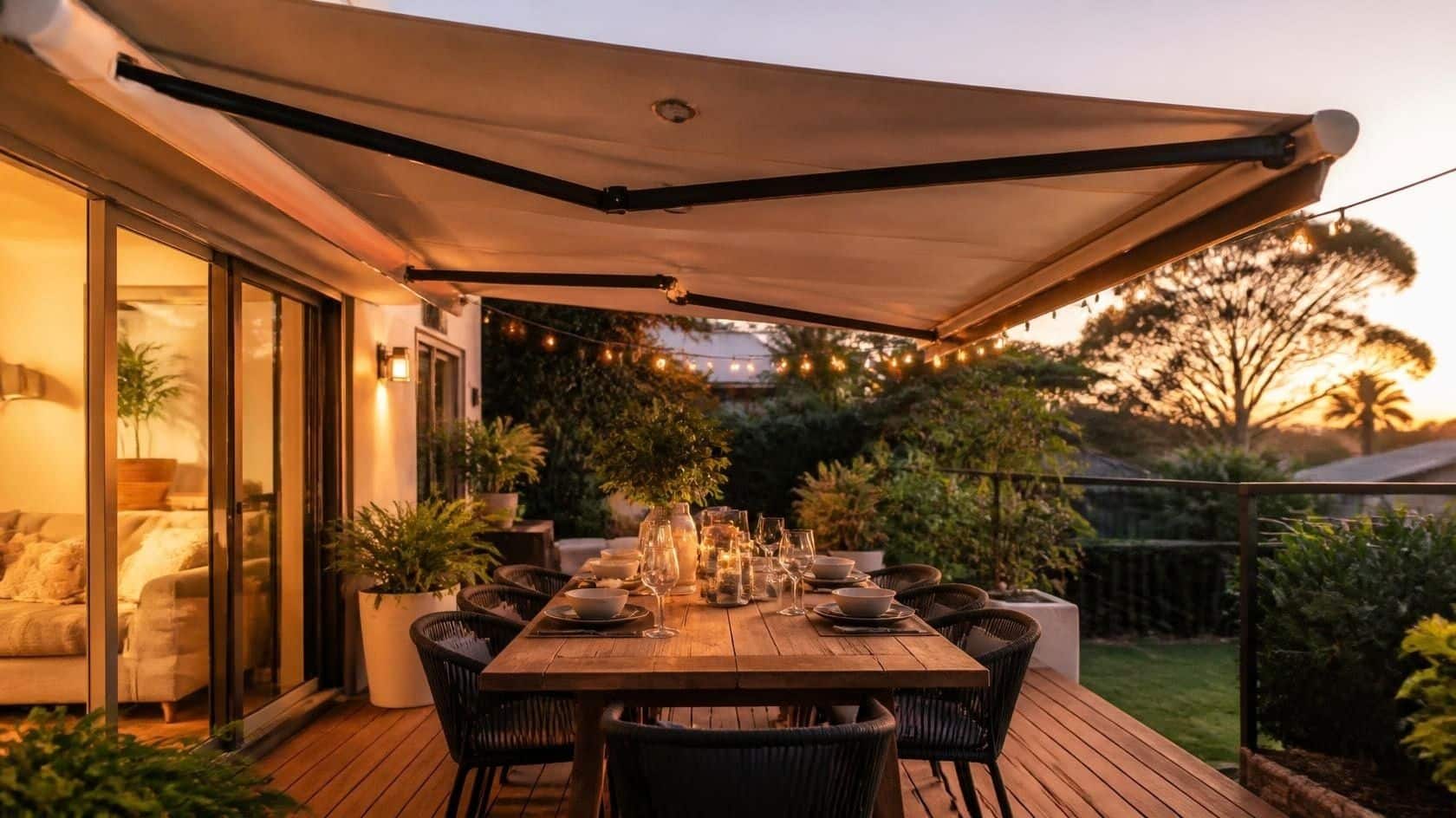
Patio Awnings: Entertaining Comfort in Every Season
Patio awnings turn an exposed outdoor area into usable space year-round. They cut summer heat and glare, keep rain off during storm season, and block wind in winter. The right style depends on how you actually use the space.
Patio awnings extend the part of your home you can genuinely enjoy outdoors. In summer, they cut direct sun and glare so entertaining doesn’t stop at midday. In storm season, they keep sudden rain from ending a barbecue early. Even in Brisbane’s milder winter, patio awnings block wind and hold in a little warmth. The right patio awning depends less on the season and more on how often you use the space and what you use it for.
Why Brisbane’s Outdoor Culture Needs More Than Shade Alone
Entertaining outdoors is a genuine part of everyday life in Brisbane. It isn’t an occasional weekend event. Patio awnings need to handle very different conditions within the same week. Summer brings intense UV and heat that can make an unshaded patio unusable by early afternoon. Storm season brings sudden, heavy downpours that can end an outdoor gathering in minutes without warning. Even winter days that reach the high 20s still benefit from wind protection. A breeze off an open patio can make an evening outdoors feel cooler than it actually is. A patio awning built for one season and ignored the rest of the year misses most of what makes the investment worthwhile.
Matching Awning Type to How You Actually Entertain

A folding arm awning suits patios where you want shade during the day and an open sky at night. It retracts fully when not needed. This makes it a strong fit for evening entertaining, where guests often prefer to see the stars once the sun has gone down. A fixed canopy awning suits a patio used constantly throughout the week, where permanent coverage matters more than the ability to retract it. Straight drop awnings work well on the western or northern side of a patio. Low afternoon sun cuts in sideways here, rather than from directly overhead. An overhead awning alone can’t block that angle. Many Brisbane homes combine an overhead folding arm awning with straight drop panels on exposed sides. This creates a space that’s shaded overhead and shielded from low sun and wind at the same time.
Getting Comfort Right Across All Four Seasons
Genuine year-round comfort comes down to a few specific features, not the awning style alone. UV-stabilised, solution-dyed fabric resists fading through Brisbane’s intense summer sun. The patio awning still looks sharp after several seasons, rather than bleaching within a year or two. Wind sensors on a motorised awning automatically retract the fabric when gusts pick up. This protects both the awning and anyone still sitting underneath during a sudden storm cell. Sun sensors do the reverse. They extend the awning automatically as heat builds through the day, so the shade is already in place before anyone notices it’s needed. For homes that entertain into the evening regularly, integrated lighting turns a shaded patio into a usable space well after sunset.
Choosing Between Fixed and Retractable for Your Patio

A fixed canopy awning offers permanent, no-fuss shade. It generally costs less to maintain, since there’s no motor or retraction mechanism involved. It suits patios that are shaded most days anyway, or households who prefer not to think about operating anything at all. A retractable folding arm awning offers more flexibility instead. It lets you open the space up fully on a mild, sunny morning and close it down for shade by early afternoon. This flexibility matters most on patios used for a wide range of activities across the day. Think of a quiet morning coffee versus an evening dinner party. Neither option is objectively better. The right choice comes down to how much control you want over the space from one hour to the next.
Protecting Furniture and Flooring, Not Just People
Patio awnings do more than keep people comfortable outdoors. UV exposure fades outdoor furniture cushions and timber decking noticeably faster on a fully exposed patio. Repeated rain exposure on unprotected timber can lead to warping or surface damage over time too. A well-positioned patio awning reduces both of these issues considerably. It extends the working life of furniture and decking that would otherwise need replacing or resealing more often. This is worth factoring into the overall investment value. It isn’t only about comfort on the days you’re outside using the space.
Sizing and Positioning for Your Specific Patio
Getting the projection and pitch right matters more than most homeowners expect. An awning with too little projection leaves the back of the patio exposed to midday sun. That defeats much of the purpose. Too much projection on a shallow patio can make the space feel enclosed rather than open. Pitch angle also affects how well rain sheds off the fabric during heavy downpours, which matters considerably during storm season. A free in-home consultation lets a design consultant assess your patio’s orientation, existing eaves, and typical sun path. This beats guessing from a generic measurement. Our canopy awning range is worth a look if a fixed, architectural style suits your patio’s period or character better than a retractable arm.
Planning Patio Awnings Around an Existing Deck or Renovation

Homeowners renovating a deck or outdoor entertaining area often treat patio awnings as an afterthought. They get added once the flooring and structure are already finished. Planning the awning alongside the renovation lets fixing points, drainage, and eave lines get coordinated from the start. That beats retrofitting around decisions already locked in. This is particularly relevant for a fixed canopy, since its bracket positions need to line up with existing structural elements. Bringing your awning consultant into the conversation early tends to produce a cleaner result. Do this even before final deck dimensions are confirmed, rather than treating shade as a finishing touch once everything else is built.
Maintaining a Patio Awning for the Long Haul
Patio awnings that get regular light care tend to look and perform better for far longer than ones left to weather untouched. A soft brush and mild soapy water once or twice a year keeps fabric free of built-up grime, which can otherwise dull the coating and shorten its lifespan. Checking the arm mechanism and fixings annually catches minor wear before it becomes a bigger repair, particularly on a patio awning that operates daily. Motorised systems benefit from an occasional check of the sensor settings too, since sun and wind thresholds can drift slightly over time and either trigger too often or not often enough. None of this takes much effort, but it makes a genuine difference to how well a patio awning holds up over a decade of Brisbane weather.
FREQUENTLY ASKED QUESTIONS
Do patio awnings work in Brisbane’s winter, or just summer?
Yes. While they’re most associated with summer shade, patio awnings also block wind and hold in a little warmth on cooler evenings, making outdoor entertaining comfortable across all four seasons.
Should I choose a fixed or retractable patio awning?
A fixed canopy suits patios shaded most days and needs less maintenance, since there’s no motor involved. A retractable folding arm offers more flexibility for patios used differently throughout the day.
Can patio awnings protect my outdoor furniture?
Yes. UV exposure fades furniture cushions and timber decking faster on an exposed patio, and repeated rain exposure can cause warping. A well-positioned awning reduces both issues considerably.
What features matter most for year-round comfort?
UV-stabilised, solution-dyed fabric resists fading, while wind and sun sensors on a motorised awning automatically retract in gusts or extend as heat builds, keeping the space usable with less manual effort.
Should I plan my patio awning before or after a deck renovation?
Before, ideally. Planning the awning alongside the renovation lets fixing points, drainage, and eave lines get coordinated from the start, rather than retrofitted around decisions already locked in.

Related Posts


Comments (0)