
Patio awnings turn an exposed outdoor area into usable space year-round. They cut summer heat…
Outside Awnings for Windows: Shade Without Blocking Your View
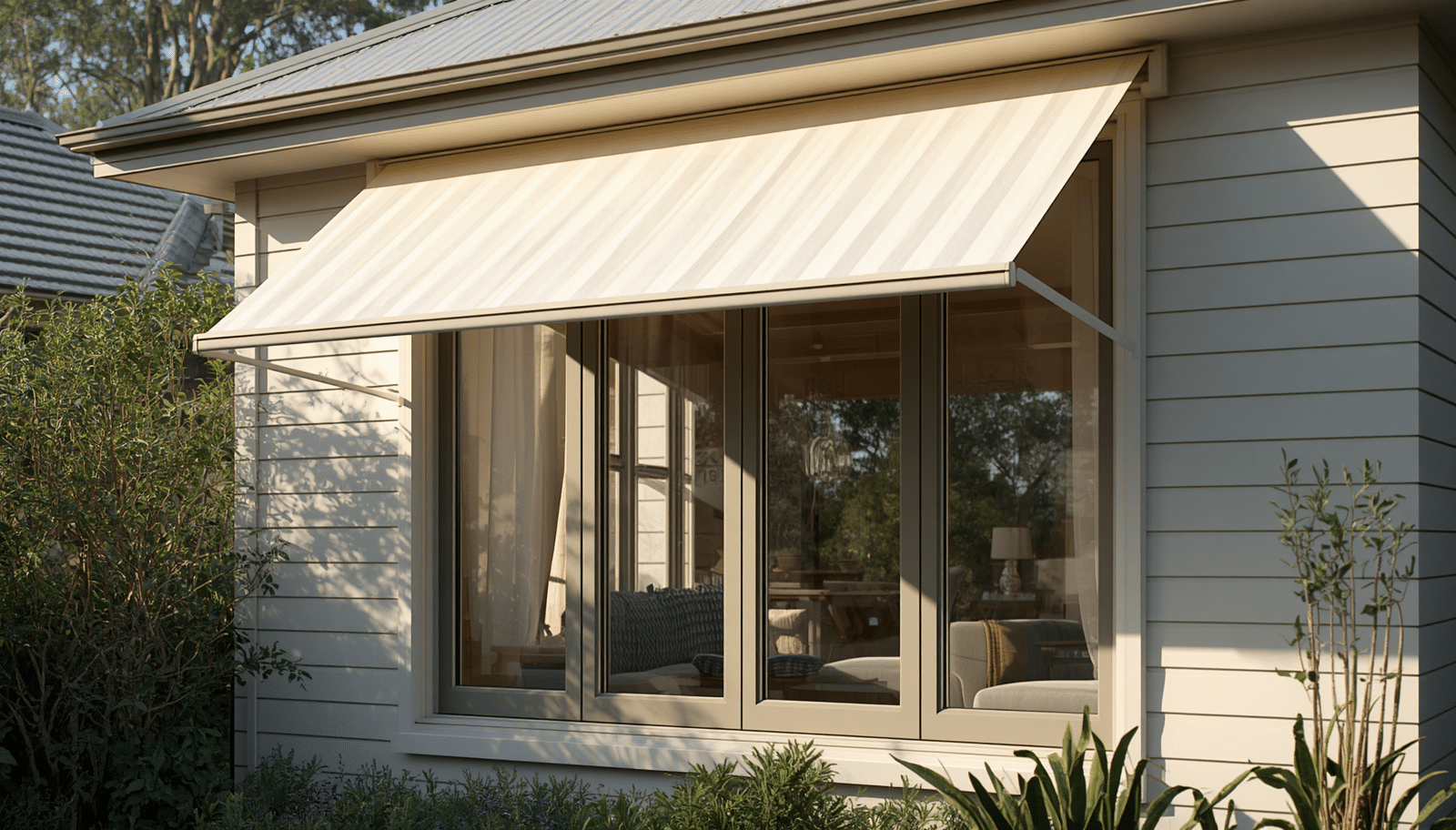
Outside awnings for windows stop the sun before it reaches the glass, so your rooms stay cooler than internal blinds alone can manage. The right style, fabric and angle also protect your outlook.
Outside awnings for windows work best when the style matches the direction your window faces. Folding arm awnings suit north-facing glass, while straight drop awnings handle low western sun. Open-weave mesh keeps your view, and clear PVC adds rain protection. Complete Blinds Brisbane makes and installs all three with our own craftsmen, so every fit suits your home.
Why Do Outside Awnings for Windows Beat Internal Blinds for Heat?
Outside awnings for windows block the sun before it touches the glass, so the heat never enters the room. Internal blinds work differently. They control light after the glass has already warmed up, which leaves that heat trapped inside.
The Australian Government’s Your Home guide backs this approach. It explains that shading windows has a significant effect on summer comfort and energy costs. It also lists blinds among the adjustable options that suit any orientation.
Brisbane’s climate strengthens the case. Our humid subtropical summers are hot and sticky, and the midday sun sits very high. As we head into the 2026 summer, more homeowners ask us how to cool their rooms without living in the dark. Shading the outside of the window is usually the answer.
Which Style Keeps the Best View?

Folding arm and straight drop awnings both protect your view when they suit the window. The trick is to match the projection, drop and fabric to the way you use the room.
A folding arm awning extends from the wall on hinged arms. Because it slopes away from the house, it shades the top of the glass and leaves the lower part open. There are no posts, so nothing interrupts your outlook.
A straight drop awning hangs vertically in front of the window. It blocks low sun better, although it covers more of the glass. A mesh fabric solves that problem, because you can still see through it from inside.
Clear PVC is the third option. It keeps sightlines fully open and shelters the window from rain. However, it holds more heat than mesh. For that reason, we usually suggest PVC for storm protection rather than for cooling.
Style matters on character homes too. Choose a fabric colour that echoes your roof or trim. Then keep the awning within the width of the window frame, so it looks designed rather than added.
The Sightline Test Most Guides Skip
Most guides talk about shade and stop there. We start with the view. During a free in-home consultation, we look at the window from where you actually sit or stand, because that eye height decides how much of the garden an awning will hide.
Here is why it matters. A folding arm awning at a shallow pitch can leave the horizon visible from a sofa but hide it from a standing position. Similarly, a deep drop can look fine from the driveway and still cut the garden in half from a dining chair. The most common mistake we see is choosing an awning for shade alone, then discovering it hides the outlook that made the window worth having.
Fabric also plays a part. Open-weave mesh lets you see out while it filters the sun, and darker colours generally give a clearer outward view than pale ones.
How Do You Choose Outside Awnings for Windows by Direction?

North-facing windows need projection, whereas east and west windows need drop. That one rule prevents most of the disappointments we see.
Around midday in November, Brisbane’s sun climbs to roughly 80 degrees. At that height, a projecting folding arm awning over a north window blocks it neatly. In the afternoon, however, the western sun sinks low and slides in underneath a projecting awning. A straight drop awning stops that low sun far better. East windows face the same problem in the morning. South-facing windows in Brisbane seldom need an awning, so you can save your budget for the sides that take the sun.
Retractable designs also earn their place in winter. When you want the sun’s warmth, you simply wind the awning back and let it in. That flexibility matches the Your Home advice to block summer sun while still allowing solar access in winter.
Do Awnings Reduce Glare, Fading and Prying Eyes?
Yes, they filter harsh light and reduce the sun damage that fades floors and furniture. A mesh fabric cuts glare on screens and televisions, yet it still passes enough daylight to keep the room bright.
Privacy improves as well. During the day, a mesh awning makes it harder for passers-by to see in, while you keep your outlook. At night, however, the effect reverses once the lights are on. Therefore, pair your awning with internal sheer blinds if you want privacy after dark. This combination suits Queenslander homes with low front windows close to the street.
Should You Choose Manual or Motorised Operation?
Motorised operation suits large, high or hard-to-reach windows, while a manual crank suits small, easy-to-reach ones. Both work well when the fabric and frame are right.
A motorised awning responds to a button, a timer or a sensor. With sun and wind sensors, it extends when the glare builds and retracts before a storm arrives. That feature matters when you are at work all day. A manual crank, in contrast, is simple, quiet and dependable. It also avoids any power connection, which can simplify installation on older character homes.
What Should You Check Before Ordering?
Check wind exposure, the wall behind the window and any approvals before you commit. These three checks decide whether an awning performs well for years.
Wind comes first. Brisbane’s storm season is tough on any external product, so we recommend sun and wind sensors on motorised awnings. The sensors retract the fabric when gusts build. Fixing is next. Brick veneer, timber cladding and rendered walls each need different fixings, and the brackets must anchor into solid framing rather than the cladding alone. Approvals come last. If you live in a unit, your body corporate by-laws may control changes to the exterior, so ask before you order.
Projection matters for clearance as well. Ask how far the awning extends when open, because casement and louvre windows swing outward and need room to move.
Humidity matters after installation too. Let the fabric dry before you retract it, because damp fabric rolled away can grow mildew. Coastal homes in Bayside and Redcliffe also benefit from an occasional rinse to remove salt.
For a wider comparison of fabrics and fixings, read our guide to awning styles, fabrics and fixings. If you also want to shade a patio, our outdoor blinds guide for Brisbane covers that job.
FREQUENTLY ASKED QUESTIONS
Do outside awnings for windows block the view?
Not when you choose the right style and fabric. Open-weave mesh lets you see out, while a folding arm awning shades the top of the glass and leaves the lower part clear. Clear PVC also keeps sightlines fully open.
Which awning is best for a west-facing window in Brisbane?
A straight drop awning usually works best, because it blocks the low afternoon sun that slides under projecting awnings. However, a folding arm awning set at a steeper pitch can also help. A free in-home consultation confirms the right fit for your window.
Do window awnings keep a house cooler?
Yes, because they stop the sun before it reaches the glass. As a result, less heat enters the room than with internal blinds alone. The Australian Government’s Your Home guide also recommends shading windows for summer comfort.
Can outside awnings for windows be motorised?
Yes, motorised awnings suit large or high windows especially well. Furthermore, sun and wind sensors can extend the awning when glare builds and retract it before a storm. A manual crank remains a simple, dependable alternative.
Do I need approval to fit an awning to a unit?
Possibly, so check your body corporate by-laws before you order. Many by-laws control changes to a building’s exterior. Houses have no body corporate, although heritage overlays can apply in some areas.

Related Posts

Comments (0)