
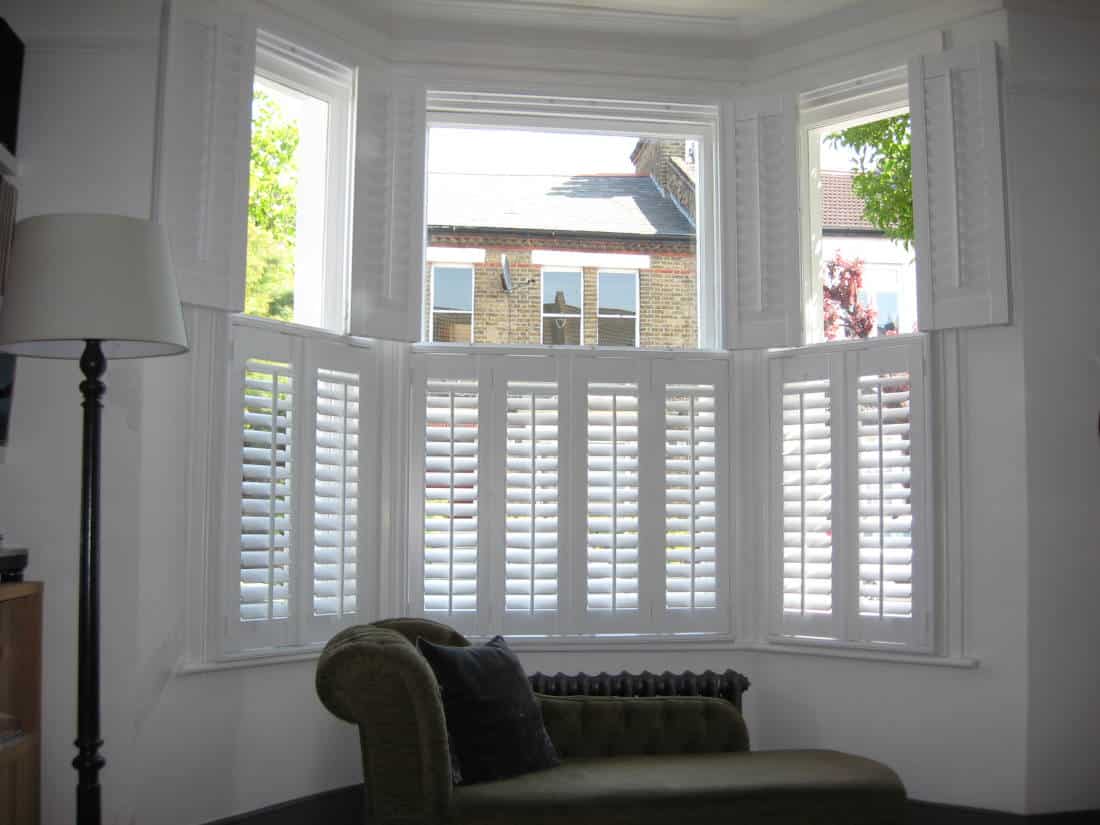
Shutters for bay windows need each angled section measured and fitted separately, with matching returns…

Internal Shutters: Privacy, Insulation, and Low Maintenance
Internal shutters give Brisbane homeowners precise control over privacy and light, reduce heat transfer through windows, and require far less upkeep than curtains or fabric blinds. This guide explains how they work across all three areas, and which materials suit each room.
What Internal Shutters Actually Do
Internal shutters are fixed window panels with adjustable horizontal louvres. They mount inside the window reveal or against the wall, and the louvres tilt to control light, airflow, and visibility. Unlike curtains, they do not move across the window — instead, you adjust the angle of the blades to change how much light and privacy you get at any moment.
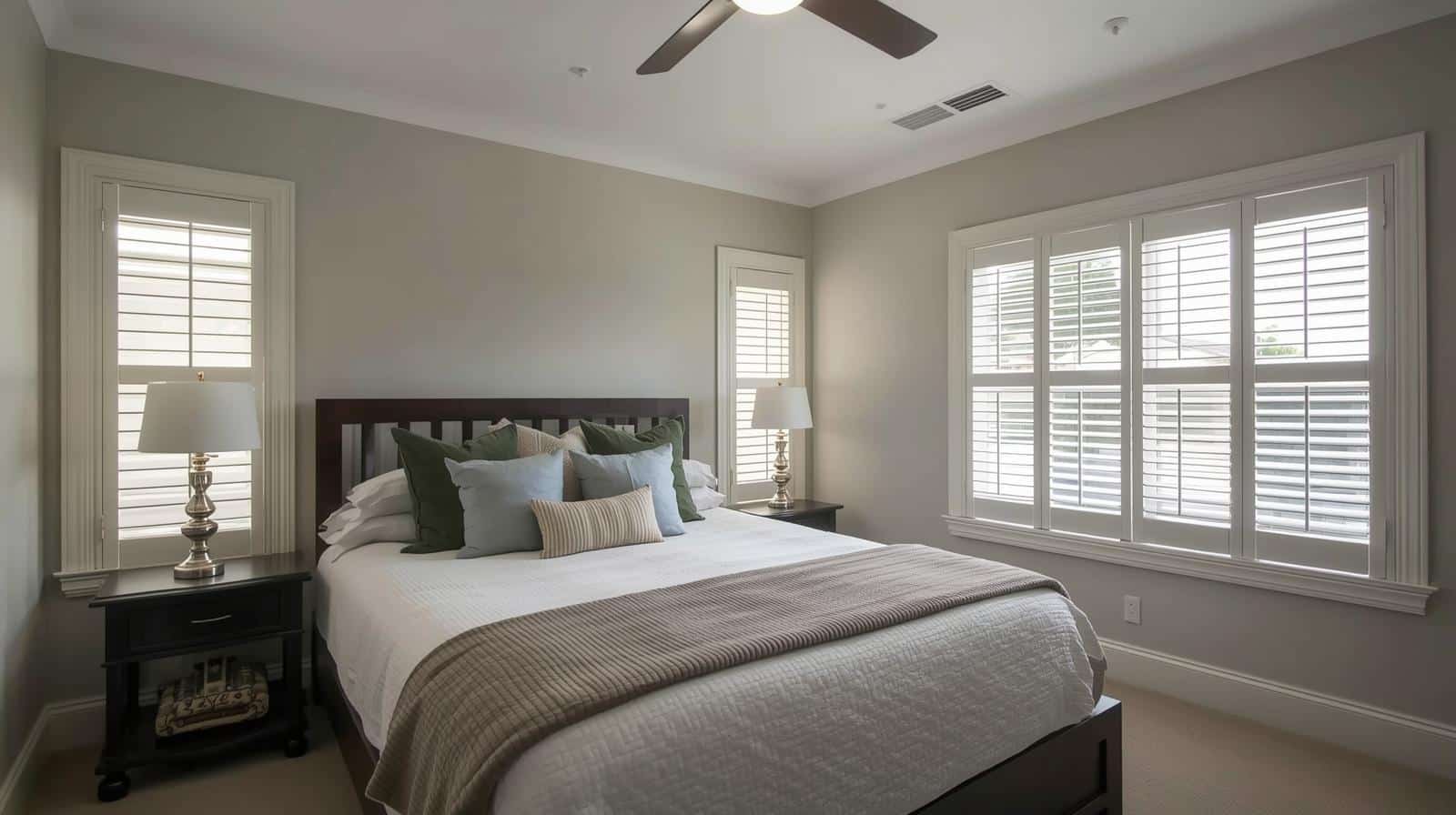
That adjustment is what makes them so practical in Brisbane homes. On a bright afternoon, you can angle the louvres downward to block direct glare while still letting diffused light into the room. On a cooler morning, tilting them open invites the breeze without exposing the interior. At night, closing them fully creates a solid visual barrier from outside. One installation handles every scenario throughout the day.
Internal Shutters and Privacy: How the Louvre Angle Works
Privacy is often the first reason Brisbane homeowners consider internal shutters. Understanding how louvre angle affects what can be seen from outside helps you get the result you want without sacrificing natural light.
During the day, light levels outside are higher than inside. When louvres are angled at roughly 45 degrees, you maintain a clear view outward from inside the room while making it difficult for anyone at ground level or street distance to see in. The angle limits sightlines without blocking light. This is the core privacy advantage of internal shutters over sheer curtains, which offer diffused privacy but still allow silhouettes to be seen at close range.
At night, the situation reverses. Interior lighting makes the room visible from outside regardless of louvre angle, unless the louvres are fully closed. For bedrooms and ground-floor living areas, closing the shutters fully at night provides complete visual privacy. The framed construction also eliminates the light gaps at the sides and top that fabric treatments often leave.
For street-facing windows or rooms at ground level, internal shutters give you a level of adjustable privacy that is simply not available with a standard blind or curtain. You control the degree of privacy rather than choosing between open or closed.
Insulation: How Internal Shutters Manage Heat in Brisbane
Brisbane summers are long and intense. West and north-facing windows in particular can allow significant heat to build up inside a room through the afternoon, increasing reliance on air conditioning. Internal shutters reduce this through two mechanisms.
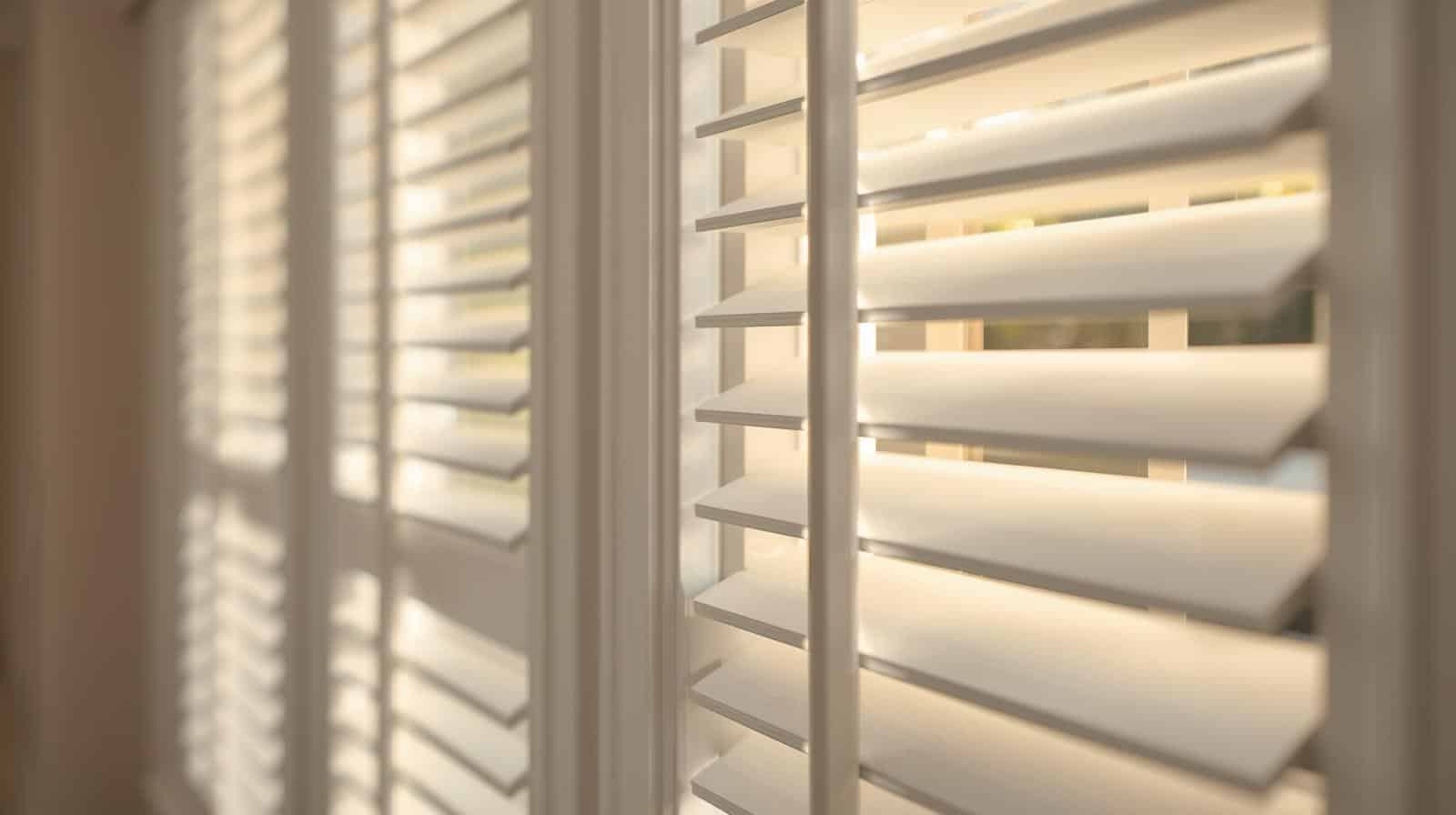
The first is shading. When louvres are angled to block direct sunlight, they intercept solar radiation before it reaches the glass and heats the room. This is most effective on windows that receive direct afternoon sun. Angling the louvres toward the sun source — rather than closing them flat — reflects light away while still admitting ambient brightness.
The second mechanism is the air gap. A well-fitted internal shutter creates a still air layer between the shutter panel and the glass. Still air is a natural insulator. In summer, this buffer slows heat transfer from hot glass into the room. In winter, it reduces the rate at which warmth escapes outward through cold glass. The result is a more stable indoor temperature across both seasons.
Material matters here. Dense polymer and composite timber shutters provide a more substantial thermal barrier than lightweight PVC alone. In rooms with large glazed areas — sliding doors, picture windows, or floor-to-ceiling glass — the insulating effect of well-fitted internal shutters is measurable in everyday comfort and can reduce air conditioning run time during peak Brisbane heat.
Internal Shutters Materials: Privacy and Insulation Performance by Type
Not all internal shutters perform equally across the three pillars. Material choice directly affects privacy, insulation, and how much care each room requires.
Timber and Composite Timber Shutters
Timber and engineered timber composites like our Brightwood Shutters deliver the warmest aesthetic and excellent louvre stiffness. Stiff louvres hold their angle precisely, which matters for privacy — a louvre that sags open over time reduces the visual barrier. Quality composites resist warping better than solid timber in Brisbane’s humidity, which is worth considering for rooms with variable temperature and moisture.
From an insulation perspective, denser materials provide a better thermal barrier. Timber composites perform well in living rooms and master bedrooms where the priority is a premium finish alongside genuine heat management.
PVC and Moisture-Resistant Shutters
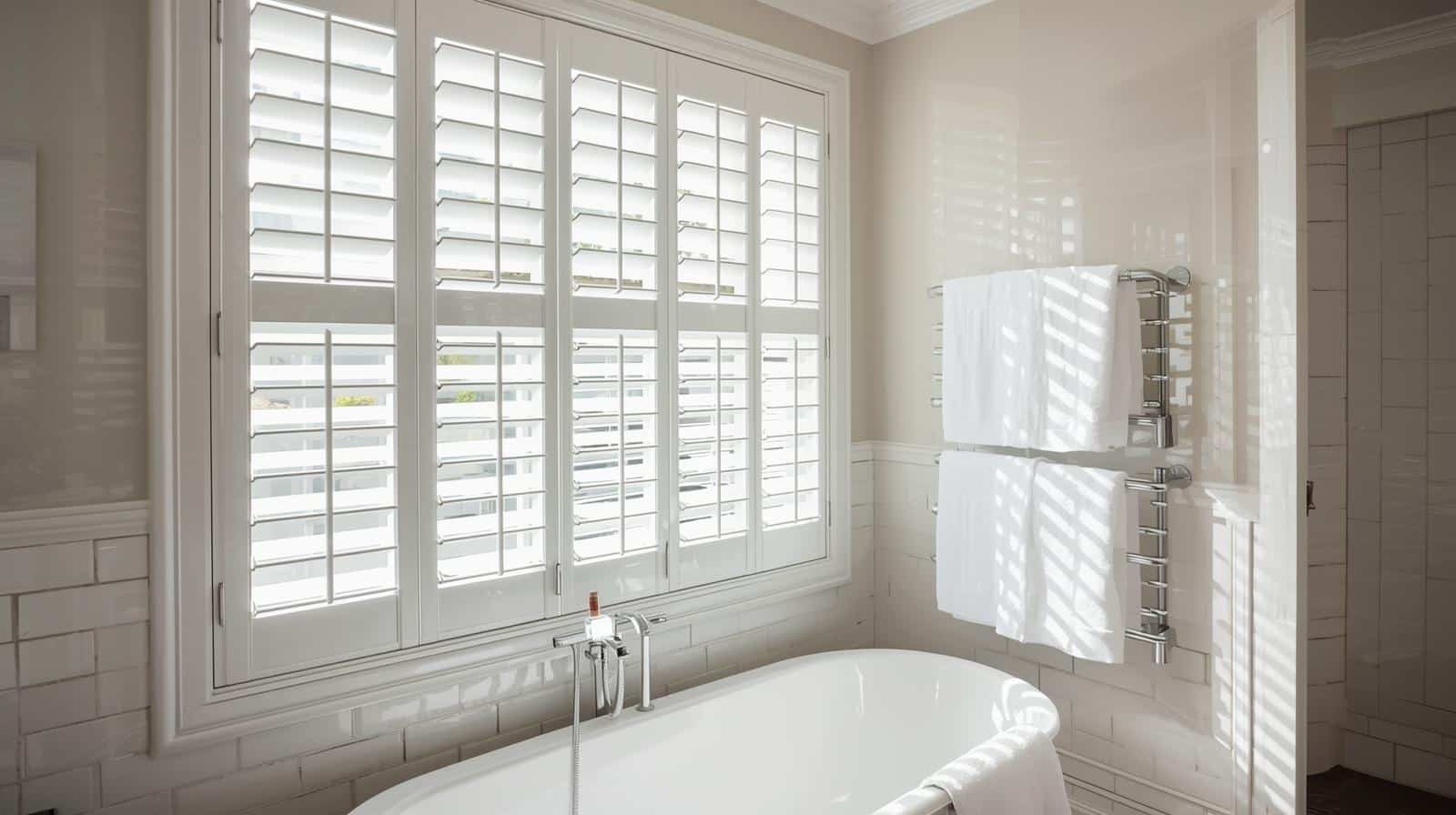
PVC shutters like Woodlore Plus are purpose-built for wet areas. Their moisture resistance makes them the right choice for bathrooms, laundries, and kitchens where humidity and water splashes are routine. From a maintenance perspective, they are the easiest to clean — a wipe with a damp cloth is sufficient, and there is no risk of warping or paint lifting from moisture contact.
For privacy, PVC shutters perform identically to timber in terms of louvre angle mechanics. The material difference is in long-term durability in wet conditions, not in privacy performance.
Aluminium Shutters
Our Aluminium Shutters suit high-exposure areas and rooms with large glazed surfaces. Aluminium handles heat, UV, and coastal salt air without degrading over time. For internal applications, it offers a slim, architectural look with strong thermal performance — the material reflects rather than absorbs heat, which is useful on west-facing glazing.
Maintenance is minimal. Aluminium does not warp, fade, or require painting. An occasional wipe with a damp cloth keeps it looking sharp.
Room-by-Room: Where Internal Shutters Work Best
Internal shutters suit most rooms in a Brisbane home, but the priorities differ by space.

In bedrooms, the combination of privacy at night and heat management during Brisbane’s long summer days makes shutters one of the most practical choices. Closed louvres provide complete privacy and significantly darken the room. For full blockout, pairing shutters with a blockout blind or curtain behind is the most reliable approach.
In living rooms, shutters manage afternoon glare on west-facing windows without requiring the room to be fully darkened. Angling louvres lets you keep the room bright while reducing direct sun on screens, furniture, and flooring. The built-in look also complements open-plan layouts where curtain tracks would feel cluttered.
In bathrooms and kitchens, moisture-resistant PVC shutters solve a genuine problem that fabric treatments cannot — they do not absorb humidity, do not grow mildew, and clean with minimal effort.
In home offices, privacy from street-level is often the deciding factor. Internal shutters allow you to control sightlines without losing daylight, which matters when screens are in use and glare is a constant consideration.
Low Maintenance: What Internal Shutters Actually Need
Low maintenance is one of the most frequently cited reasons homeowners choose internal shutters over curtains or fabric blinds. In practice, that means a few simple habits rather than no care at all.
Regular dusting is the main task. A dry microfibre cloth or the soft brush attachment of a vacuum removes dust from louvres efficiently. Most internal shutters need this every two to four weeks, depending on how much air movement passes through the room. Brisbane’s warmer months tend to accelerate dust accumulation near open windows.
For a deeper clean, a lightly dampened cloth works on most materials. On timber composites, dry promptly to avoid prolonged moisture contact. On PVC and aluminium, a damp cloth is straightforward and there is no drying concern.
Check the tilt mechanism and hinges periodically. Smooth louvre action should be effortless. If a louvre starts to resist or feels stiff, address it early — a small adjustment prevents the mechanism from wearing unevenly over time.
Avoid abrasive cleaners and high-pressure washing on all internal shutter materials. Both damage painted or coated finishes and can compromise the surface long term.
Why Professional Installation Matters
The performance of internal shutters — for privacy, insulation, and long-term ease of use — depends on how accurately they are measured and fitted. Gaps at the sides or top of the panel allow light and heat to pass through, reducing both insulating and privacy benefits. Frames that are not level cause louvres to bind. Panels that are too narrow leave visible light lines.

At Complete Blinds Brisbane, we have been measuring and installing internal shutters across Brisbane and surrounding suburbs since 1989. We use our own trained craftsmen and never rely on sub-contractors, so the precision of the measure, the quality of the manufacturing specification, and the standard of the installation all stay consistent from start to finish.
Explore our full plantation shutters range to compare materials and styles before your consultation.
Frequently Asked Questions
How do internal shutters provide privacy without blocking all the light?
Louvre angle controls the balance between privacy and light. During the day, angling louvres at roughly 45 degrees limits sightlines from outside while still admitting diffused natural light. At night, closing louvres fully provides complete visual privacy. This adjustable control is the core advantage over curtains or blinds that offer only open or closed options.
Do internal shutters actually reduce heat in Brisbane homes?
Yes. Internal shutters reduce heat transfer through two mechanisms: angled louvres intercept direct solar radiation before it heats the room, and a well-fitted shutter creates a still air gap between the panel and glass that acts as a natural insulator. The effect is most noticeable on west and north-facing windows during Brisbane’s long summer afternoons.
Which internal shutter material is easiest to maintain?
PVC and aluminium require the least maintenance — both clean with a damp cloth and resist moisture, humidity, and Brisbane’s UV intensity. Timber composites are straightforward in living areas but need prompt drying if damp. All internal shutters are considerably easier to maintain than fabric curtains or blinds.
Can internal shutters be fitted in bathrooms and kitchens?
Yes, with the right material. Moisture-resistant PVC shutters are purpose-built for wet areas. They resist humidity, do not warp, and clean easily. Standard timber or composite shutters are better suited to dry rooms.
Do internal shutters reduce sound as well as heat?
Internal shutters add a solid surface layer over glass, which reduces sound reflections within a room and softens some external noise transmission. They are not a primary acoustic solution, but pairing them with heavy curtains provides additional soft material for greater noise reduction when that is a priority.

Related Posts

Comments (0)