

Awnings Brisbane: How to Choose a Quality Installer
Choosing the right awnings Brisbane installer comes down to three things. Look for verified licensing, in-house craftsmen instead of subcontractors, and a genuine free measure and quote.
The best awnings Brisbane homeowners can buy are only as good as the installer behind them. A quality awnings Brisbane specialist holds a current Queensland licence, uses their own trained team rather than subcontractors, and measures your home in person before recommending a solution. They also engineer for local wind and heat, not just for looks. Get the installer right, and the awning itself becomes the easy part.
Why Brisbane’s Climate Changes the Brief

An awning in Brisbane has to work harder than one in a milder climate. Summer humidity regularly sits between 70 and 75 percent. That moisture speeds up corrosion in cheap brackets and fixings. It also fades poor-quality fabric almost as fast as direct sun does. Consequently, an installer who hasn’t worked through a full Brisbane wet season doesn’t yet know how their product performs under real pressure. Powder-coated aluminium frames cope far better with heat and salt-laden air than budget imports. So does UV-stabilised canvas or acrylic fabric. As of 2026, Brisbane’s storm season still brings short, intense wind gusts. These catch out awnings fixed with generic hardware instead of fixings matched to the wall. A quality installer inspects your fascia, brickwork, or render first. Only then do they recommend a fixing method.
Checking Licensing Before You Sign Anything
A properly licensed awnings Brisbane installer will show you a current Queensland Building and Construction Commission (QBCC) licence number without hesitation. That number is free to verify on the QBCC website. Under Queensland law, awning work above the QBCC’s minimum contract threshold legally requires a licensed contractor. This is because an awning is a structural fixture, and it carries real wind loading once it’s up. Therefore, asking for a licence number isn’t an awkward question. It’s a basic safeguard. A reputable installer offers proof of public liability insurance alongside it. If a quote arrives with no licence detail and no paperwork, treat that as a signal. Keep looking, no matter how competitive the price looks.
In-House Craftsmen Versus Subcontracted Teams
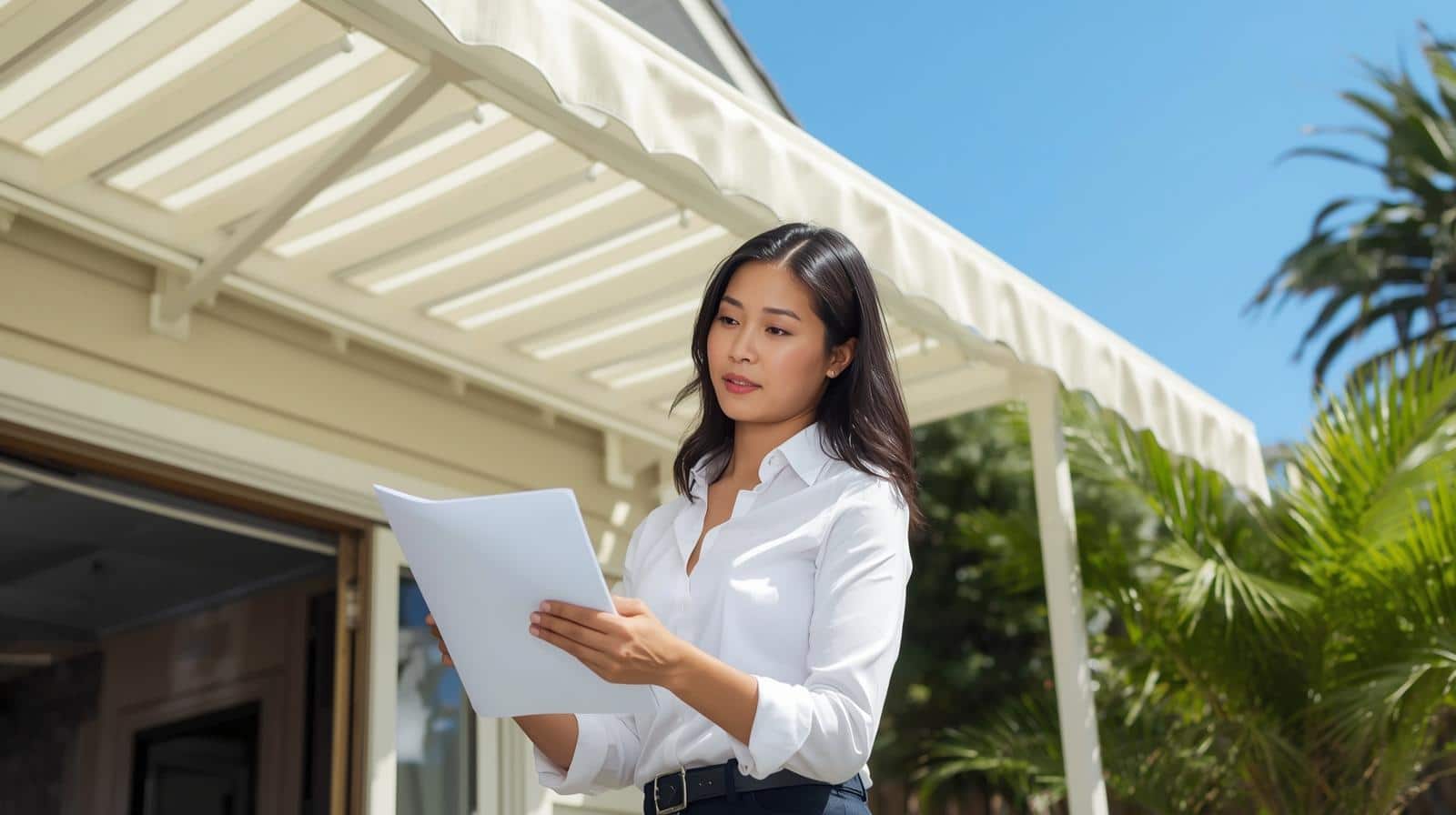
Many awning suppliers in Brisbane sell the job themselves, then hand the install to a subcontracted crew you’ve never met. At Complete Blinds Brisbane, every awning is measured, fabricated, and fitted by our own trained craftsmen. We never use subcontractors. This means the person who designs your solution is accountable for how it performs once it’s on the wall. That matters most when something needs adjusting later. A subcontractor who has already moved on to the next suburb has little reason to come back. Fine-tuning a folding arm or realigning a pivot bracket becomes someone else’s problem. An in-house team has a direct, ongoing relationship with the business whose name is on your invoice and your warranty.
What a Genuine Free In-Home Consultation Looks Like
A proper free in-home consultation is a measuring and advice visit, not a sales pitch. A design consultant should assess sun angles across your home through the day. They should check your wall and fascia materials up close. From there, they can discuss whether a folding arm, straight drop, or motorised awning suits your outdoor space best. This is also when a good installer walks you through fabric samples in natural light. Colours read very differently under a showroom bulb than on a Brisbane afternoon. No pressure to sign on the spot is a good sign. A consultant confident in their product doesn’t need to rush your decision. If you’re still comparing styles, our awning guide covers the differences between folding arm, straight drop, and fixed canopy designs in more depth.
Materials and Engineering Built for Storm Season
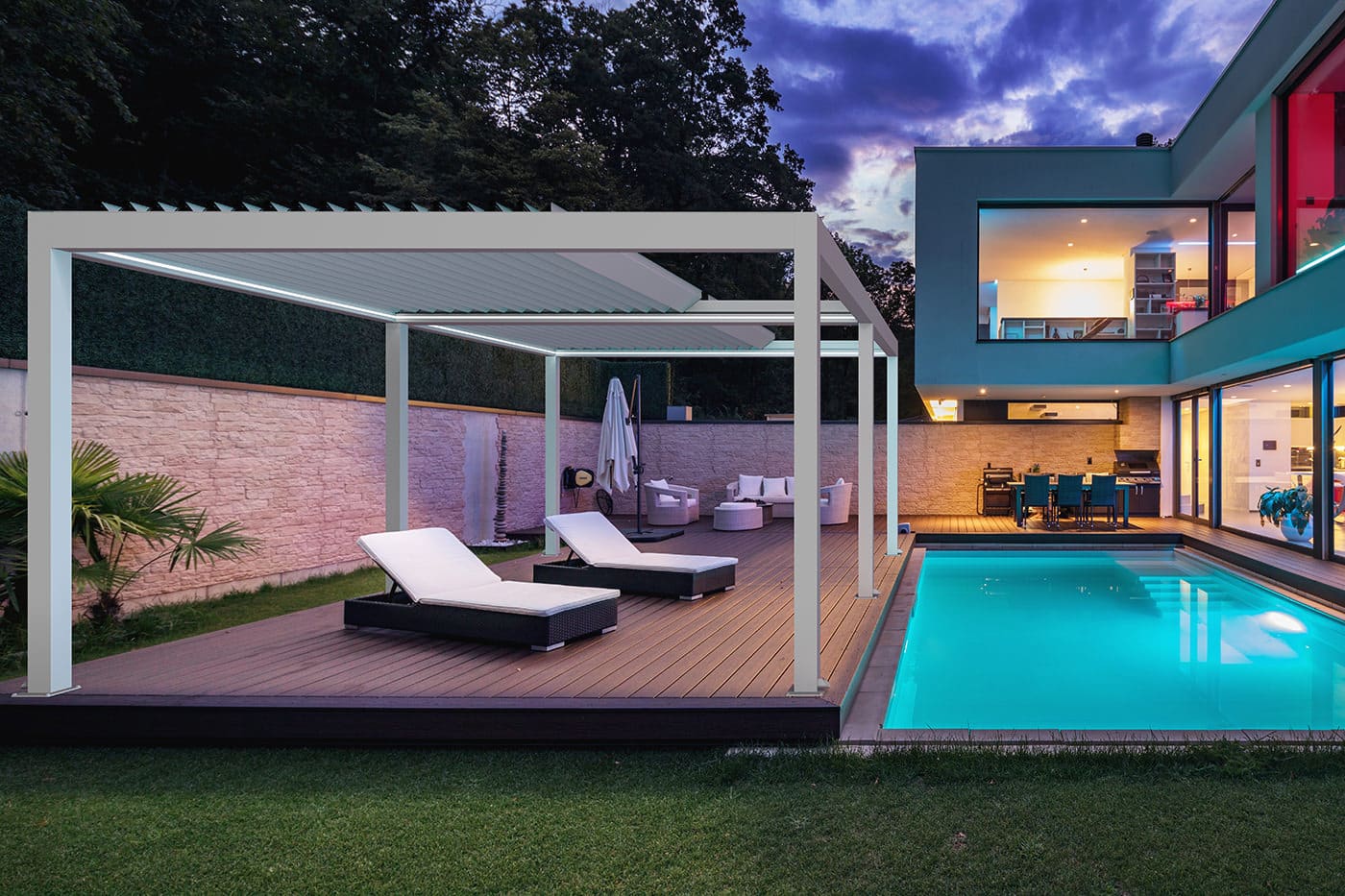
How do you know an awning will survive a Brisbane storm? Look for stainless steel or marine-grade fixings first. Powder-coated frames rated for coastal exposure matter just as much. Fabric should carry a genuine multi-year warranty, not a vague promise. A well-engineered folding arm awning spreads wind load through its arms and can retract quickly once weather turns. A fixed canopy needs to be engineered correctly from day one. It can’t be wound in when a storm hits. Reinforced brackets matter more than most people expect on wider spans. An undersized bracket is usually the first point of failure in a wind event, not the fabric. Ask your installer what wind rating their system carries. Also ask how they anchor into your specific wall type, whether that’s brick veneer, timber fascia, or rendered block. Homeowners weighing a fixed look can see how our canopy awning range suits period and character homes without compromising on strength.
Questions Worth Asking Before You Book
A short checklist saves a lot of frustration later. Before booking any awnings Brisbane installer, it’s worth asking:
- Can you provide your current QBCC licence number and proof of insurance?
- Will your own team install the awning, or is the work subcontracted?
- What warranty covers the fabric, and what separate warranty covers the frame and motor?
- How do you fix into my specific wall type, and what fixings do you use?
- What happens if I need an adjustment six months after installation?
A confident, established installer answers all five without hesitation. Vague or evasive answers, particularly around licensing and warranty, are worth treating as a warning sign rather than a minor detail.
Common Mistakes Homeowners Make When Comparing Quotes
The most common mistake we see is choosing purely on price without checking who actually does the install. A cheap quote from a directory-style reseller often hides a subcontracted crew paid per job, with little incentive to spend extra time getting a tricky bracket right. Another frequent misstep is skipping the in-home measure altogether and ordering an awning based on a phone estimate. Windows, fascias, and rooflines are rarely perfectly square in older Queenslander and character homes, so a measurement taken without seeing the property in person often leads to a poor fit. Homeowners also sometimes overlook fabric warranty terms, focusing only on the frame warranty and assuming both are covered the same way. In practice, frame and fabric usually carry separate warranty periods, and it pays to ask for both in writing before you sign anything.
FREQUENTLY ASKED QUESTIONS
Do awning installers need a licence in Queensland?
Yes. Awning work valued above the QBCC’s minimum contract threshold legally requires a licensed contractor, since an awning is a structural fixture. Always ask for a current QBCC licence number before booking, and verify it on the QBCC website.
How do I know if an awning will survive a Brisbane storm?
Look for stainless steel or marine-grade fixings, powder-coated frames rated for coastal exposure, and a genuine multi-year fabric warranty. Reinforced brackets matter as much as the fabric itself, particularly on wider spans.
What’s the difference between an in-house installer and a subcontractor?
An in-house craftsman works directly for the business that sold you the awning, so they’re accountable for the result long-term. A subcontractor is often paid per job and may have little ongoing connection to the company on your invoice.
What should I ask before booking an awnings Brisbane installer?
Ask for their QBCC licence number, confirm whether their own team installs the work, and get frame and fabric warranty terms in writing. A confident, established installer will answer all of these without hesitation.
What happens during a free in-home consultation?
A consultant assesses sun angles, checks your wall and fascia materials, and shows you fabric samples in natural light. It should feel like an advice visit, not a sales pitch, with no pressure to sign on the spot.

Comments (0)