
Curtain price mainly comes down to four things. These are fabric choice, the amount of…
Curtain Heading Styles Explained: S-Fold, Pinch Pleat, Eyelet
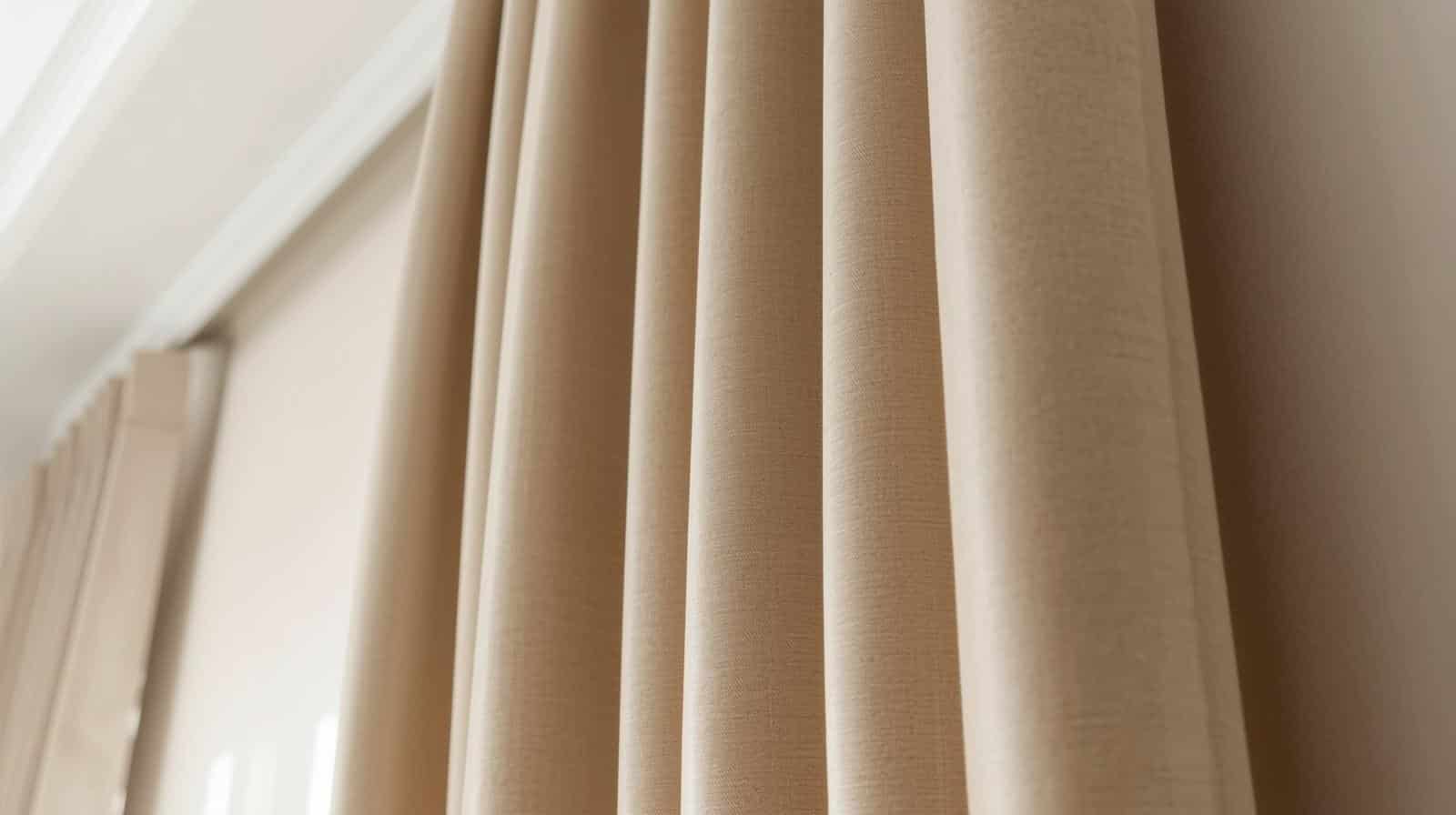
The heading style of a curtain determines how it hangs, how much fabric it uses, and what kind of look it creates. S-fold gives clean, modern waves. Pinch pleat delivers a tailored, classic finish. Eyelet creates relaxed, even folds. Choosing the right one depends on your room, your hardware, and the aesthetic you want.
Why the Heading Style Matters More Than Most People Realise
Most homeowners spend time choosing curtain fabric, colour, and length. The heading style — the way the top of the curtain is finished and how it attaches to the track or pole — often gets less attention. Yet it shapes the entire look of the window more than almost any other decision.
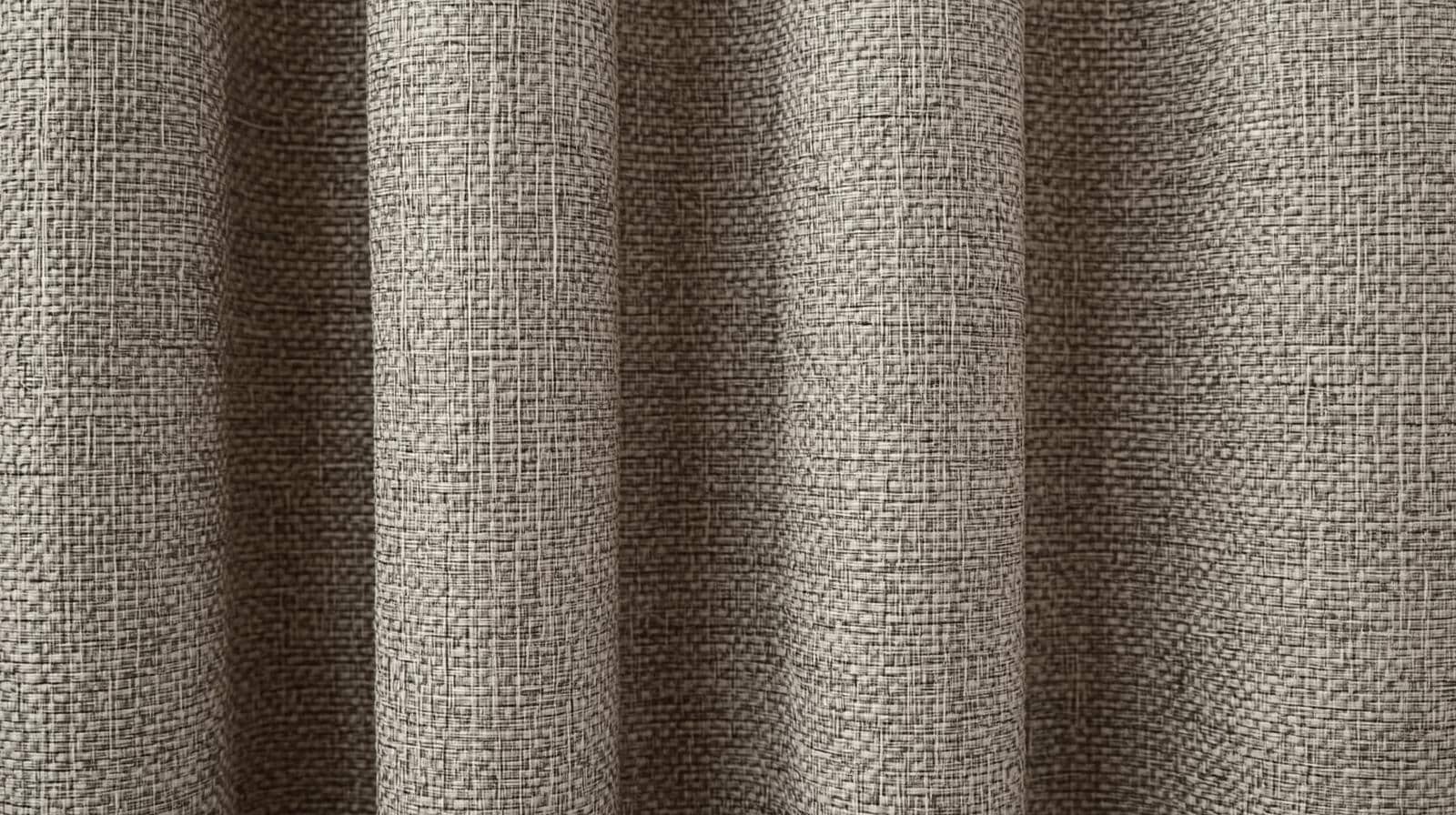
The heading determines how the fabric falls and folds, how much light enters around the edges, how much wall space the curtain takes up when open, and whether the look reads as contemporary, classic, or relaxed. It also dictates what hardware you need — not every heading works on every track or pole.
In Brisbane homes, where large windows and open-plan living are common, curtain heading choices carry extra weight. Floor-to-ceiling curtains in an open-plan space become a major visual element. Getting the heading right makes them look intentional and considered. Getting it wrong can make even beautiful fabric look awkward.
S-Fold Curtains — Clean, Contemporary Waves
S-fold curtains — sometimes called wave curtains — create a continuous series of soft, even S-shaped curves across the full width of the window. The effect is elegant and understated. There are no sharp pleats or gathered fabric bunches. The curtain moves in one smooth, flowing line from track to floor.
The heading works by attaching to evenly spaced gliders on a specially designed track. Each glider sits at a fixed distance apart, which creates the consistent wave pattern. Because the spacing controls the shape, S-fold curtains always look neat and uniform — they require almost no dressing or adjustment after hanging.
S-fold works best with track systems rather than poles. The track sits close to the ceiling or within a ceiling recess, which creates the ceiling-to-floor effect that suits contemporary Brisbane homes and modern apartments. The minimal stackback is another practical advantage — when open, the curtain gathers into a compact bundle that takes up little wall space and keeps windows feeling large and unobstructed.
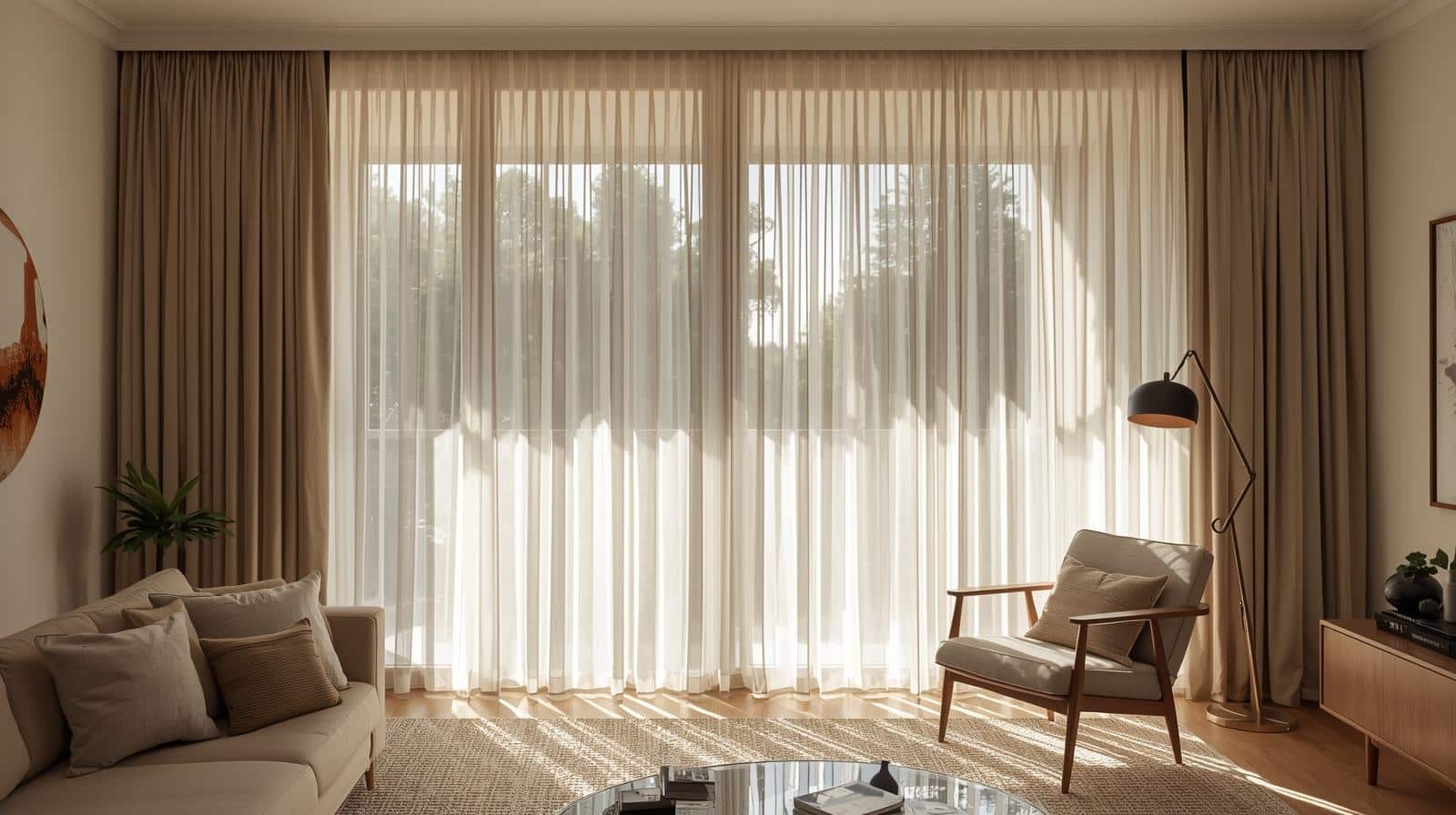
For Brisbane homes with high ceilings, full-height windows, or open-plan living and dining areas, S-fold curtains are a particularly strong choice. The style also pairs well with sheer curtains in a layered setup, where a sheer S-fold drops behind a blockout layer for light control throughout the day.
Pinch Pleat Curtains — Tailored and Timeless
Pinch pleat curtains have a structured, formal quality that no other heading quite replicates. The fabric folds into neat groups of two or three pinched pleats sewn permanently into the heading. The result is a tailored, architectural look where the curtain holds its shape whether open or closed.

Double pinch pleat uses two folds per group and suits most formal applications. Triple pinch pleat uses three folds and creates a fuller, richer drape that works especially well with heavier fabrics and larger windows. Both styles hold their position without any dressing — the pleats keep the fabric organised at all times.
Pinch pleat curtains work on both tracks and poles, which makes them versatile in terms of hardware. On a decorative rod with finials, triple pinch pleat curtains create a classic, considered look that suits traditional Queensland homes, formal dining rooms, and bedrooms where the window is a focal point.
One practical note: pinch pleat headings use more fabric than S-fold or eyelet. That adds to the material cost but also adds density, which helps with light blocking and thermal performance — useful in Brisbane rooms that face morning sun.
Eyelet Curtains — Relaxed and Easy to Hang
Eyelet curtains use metal rings punched directly through the fabric at regular intervals. The curtain pole threads through these rings, which creates large, even folds that fall in a relaxed, informal pattern.
The look is contemporary and unfussy. Eyelet curtains suit casual living spaces, rumpus rooms, and bedrooms where the goal is comfort and ease rather than a formal finish. They are also the simplest heading to hang — slide the pole through the rings and the curtains are up.
One important limitation to understand is hardware compatibility. Eyelet curtains only work on poles — they cannot be used with a track system. This means they are not suitable for ceiling-mounted installations or rooms where a discreet, close-to-ceiling hardware solution is preferred.
Light leakage at the top is also worth noting. Because the fabric folds away from the pole between each ring, small gaps appear along the heading when the curtain is closed. For rooms where full light blockout is the priority, a different heading style or an additional blockout lining layer will perform better.
For relaxed family homes and informal spaces across Brisbane, eyelet curtains in a quality fabric deliver an easy, contemporary look that works well day-to-day.
Comparing All Three — A Quick Reference
Understanding how each heading performs side by side helps make the decision clearer.
S-fold creates the most contemporary, minimal look and works only with track systems. It suits modern homes and open-plan spaces where a seamless ceiling-to-floor effect is the goal. Stackback is compact and tidy.
Pinch pleat is the most formal and structured option. It works on both tracks and poles, uses more fabric, and creates a rich, tailored appearance that suits traditional and formal spaces. It holds its shape without any adjusting.
Eyelet is the most relaxed and casual of the three. It works on poles only, hangs easily, and creates generous informal folds. It suits family living areas and bedrooms but is not the right choice for high-light-control applications.
Which Heading Style Suits Each Room?
Matching heading style to room function makes every space feel intentional and well-considered.
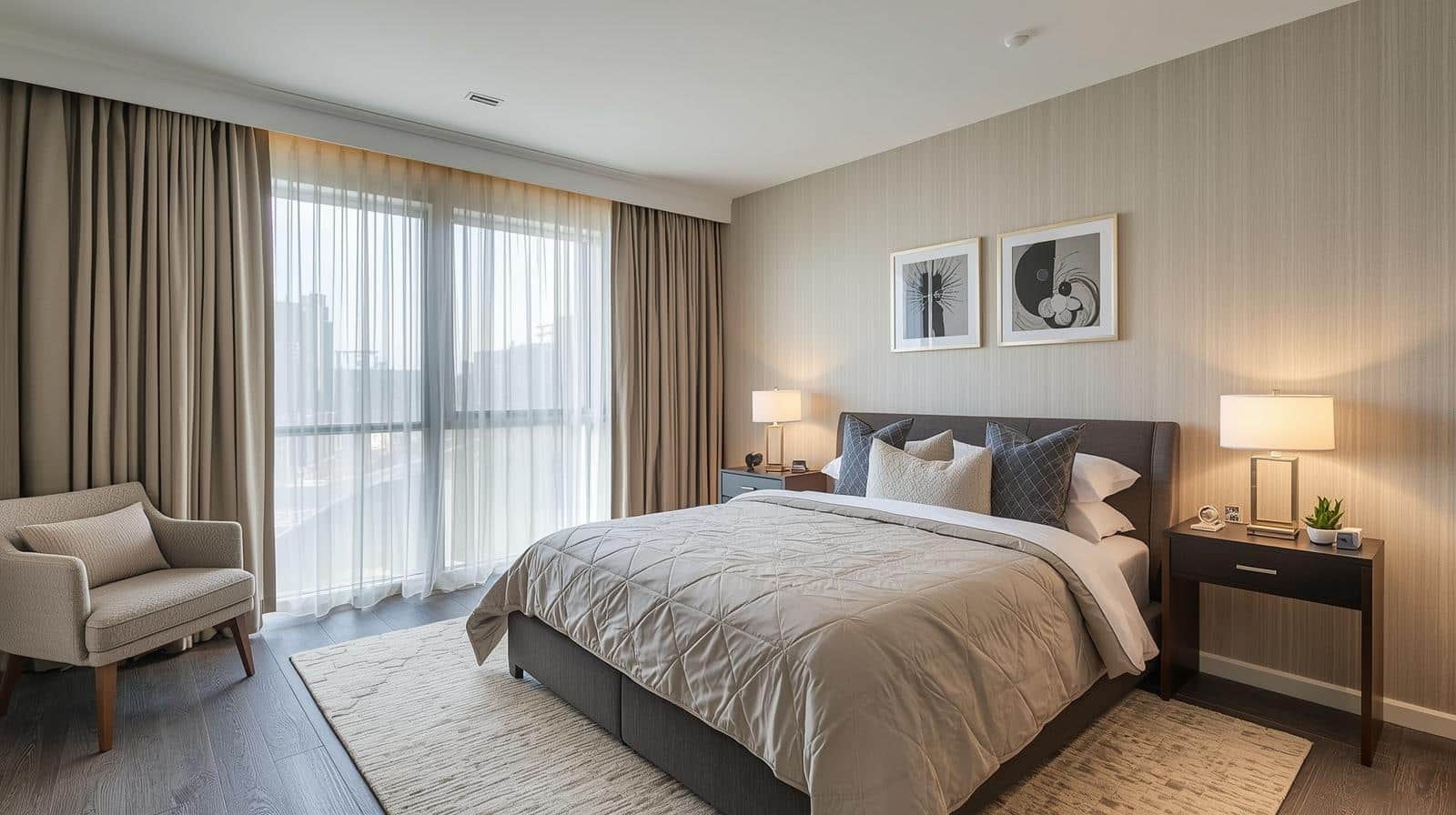
Bedrooms in Brisbane homes benefit most from pinch pleat or S-fold headings, particularly when paired with a blockout or thermal-backed fabric. Both styles sit closer to the wall and ceiling, which reduces light leakage at the edges and helps the room stay darker for longer in Queensland’s early-sunrise mornings.
Living rooms and open-plan areas suit S-fold curtains well. The clean wave profile looks fresh in contemporary interiors and disappears neatly when the curtains are open. Layering an S-fold sheer with a blockout panel on the same track gives full flexibility for different times of day.
Dining rooms and formal sitting rooms are where pinch pleat curtains shine. The structured heading adds a sense of occasion that suits rooms used for entertaining. Triple pinch pleat in a linen or velvet fabric creates exactly the rich, considered look that makes a formal room feel complete.
Rumpus rooms, kids’ bedrooms, and casual family spaces are well-suited to eyelet curtains. The relaxed fold and simple operation make them a practical, low-fuss choice where everyday use is the priority.
Hardware, Tracks, and Compatibility
Choosing the right heading and then discovering it doesn’t suit your existing hardware is a frustrating and avoidable mistake. Getting hardware and heading right together from the start saves time and cost.
S-fold requires a dedicated wave track with evenly spaced gliders. The spacing of the gliders determines the wave size and frequency, so the track and heading are chosen together rather than separately. Ceiling-mounted wave tracks give the best result for contemporary Brisbane homes.
Pinch pleat works on both tracks with hook fittings and decorative poles with rings. This flexibility makes it the most hardware-versatile option of the three. For homes with existing poles or tracks, pinch pleat is often the easiest transition.
Eyelet requires a smooth, unobstructed pole that threads directly through the rings. Decorative finials need to be removable at one end to allow the curtain on and off the pole. Pole diameter matters too — standard 35mm to 50mm poles suit most eyelet headings well.
If you’re also considering motorised curtain tracks for convenience — particularly for high windows or hard-to-reach areas — S-fold and pinch pleat both adapt well to motorised systems. Eyelet curtains do not suit motorised tracks.
Complete Blinds Brisbane’s team can help you match the right heading, fabric, and hardware for every room. With over 35 years of experience supplying and installing custom curtains Brisbane homeowners trust, we understand what works in Brisbane’s home styles and climate. Our own experienced team handles every consultation and installation — no sub-contractors.
Choosing the Right Fabric to Complement Your Heading
The heading style and fabric weight work together to create the finished look. Some pairings perform better than others.
S-fold works best with medium-weight fabrics that drape smoothly. Heavy fabrics can make the wave too stiff. Very lightweight sheers suit S-fold beautifully and create that soft, flowing effect characteristic of the style. In Brisbane’s warmer months, lighter S-fold sheers keep rooms feeling open and airy.
Pinch pleat handles a wider range of fabric weights. Heavier linens, velvets, and woven fabrics all look excellent in a triple pinch pleat heading. The structure of the heading supports heavier material well. For Brisbane bedrooms facing west or north, a heavier pinch pleat blockout fabric provides both visual impact and genuine heat control.
Eyelet suits medium-weight fabrics best. Very heavy fabrics make the rings difficult to slide along the pole. Very lightweight fabrics can look insubstantial in the large eyelet folds. A mid-weight linen or cotton blend hits the right balance for most applications.
Frequently Asked Questions
What is the difference between S-fold and pinch pleat curtains?
S-fold curtains create a continuous, even wave pattern using evenly spaced gliders on a track. The look is smooth, modern, and minimal. Pinch pleat curtains use sewn permanent folds grouped in twos or threes along the heading. The result is more structured and formal. S-fold suits contemporary homes and open-plan spaces. Pinch pleat suits traditional interiors and formal rooms.
Can eyelet curtains be used on a track?
No. Eyelet curtains only work on poles. The metal rings thread directly onto the rod. They cannot be used with a track system or ceiling-mounted hardware. If you want a track installation — particularly a ceiling-recessed or motorised system — S-fold or pinch pleat headings are the right choice.
Which curtain heading is best for blocking light in a Brisbane bedroom?
Pinch pleat and S-fold both perform well for light blockout in bedrooms. Both styles sit close to the wall and ceiling when paired with the right track, which reduces light leakage at the edges. Eyelet curtains create small gaps along the heading between rings, which allows more light in. Pairing any heading with a blockout or thermal-backed fabric improves performance significantly.
How much fabric does each heading style use?
Pinch pleat uses the most fabric — typically two to two-and-a-half times the track width. S-fold uses a set fullness ratio determined by the track’s glider spacing, usually around two times the width. Eyelet uses slightly less fabric than pinch pleat, generally one-and-a-half to two times the width. More fabric means a fuller, richer drape but adds to the overall material cost.
Which curtain heading works with motorised tracks?
S-fold and pinch pleat both work well with motorised curtain tracks. S-fold is particularly suited to motorisation because the wave track and motor system are purpose-designed to work together. Eyelet curtains do not suit motorised tracks, as the rings cannot travel along a motorised system the way hook or glider fittings do.

Related Posts


Comments (0)