
Bay window curtains work best with a curved or bent track. It should follow the…
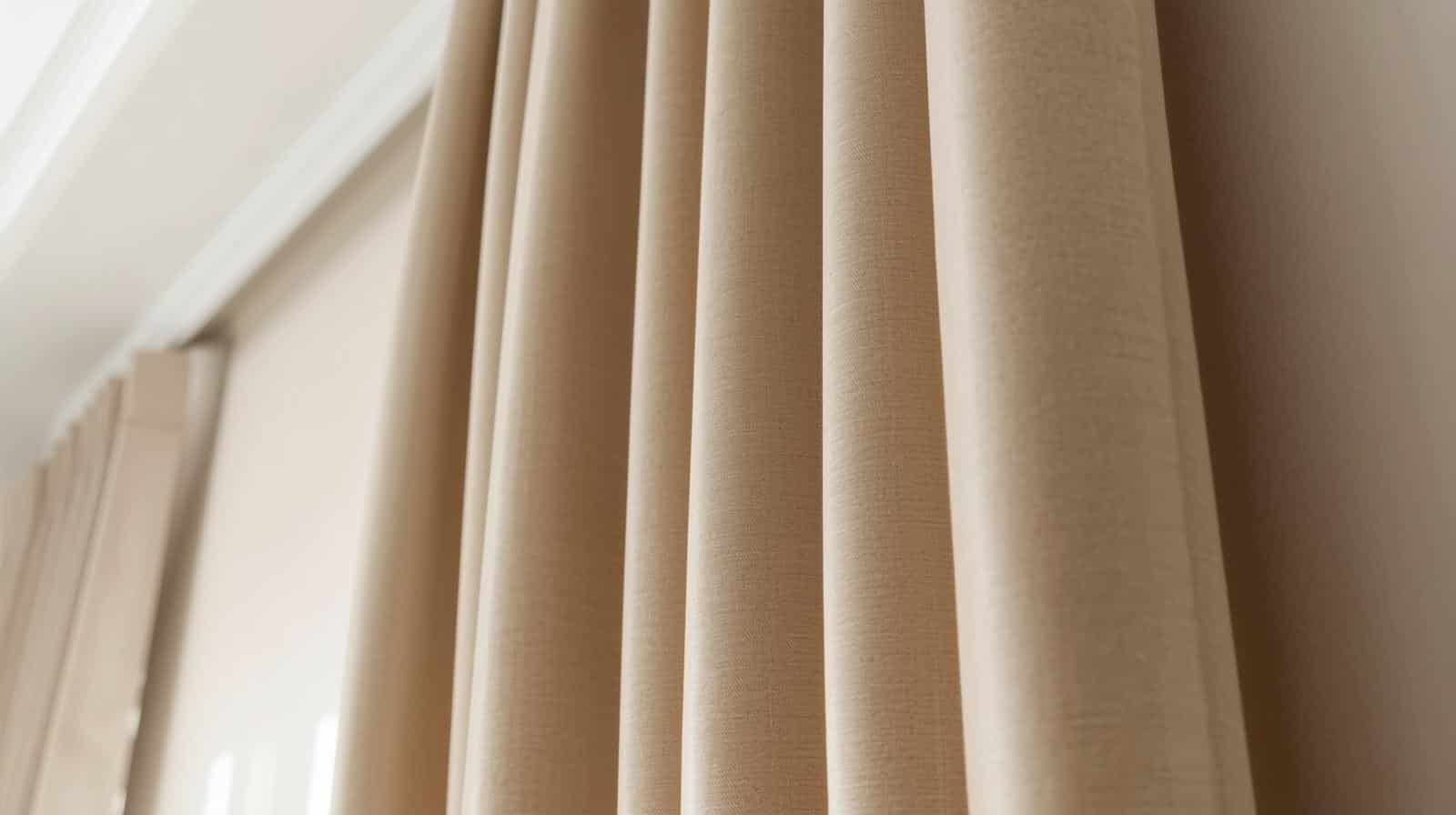
How to Measure Curtains: Floor-to-Ceiling and Recess Mounts
How to measure curtains comes down to three numbers: track width, drop and stack-back. Measure each in millimetres at several points, then use the shortest drop.
How to measure curtains starts with the track, not the window. Fix the track position, then measure its width, the drop from track to floor, and the space the curtains need to stack when open. Take each measurement at three points, because most Brisbane homes are out of level. Use the shortest drop. Complete Blinds Brisbane confirms every measure with our own craftsmen.
What Tools and Steps Do You Need to Measure Curtains?
You need a steel tape, a pencil, a notepad and a helper for tall windows. The process then follows five short steps.
First, decide the heading style and track position, because everything else depends on them. Second, mark where the track will start and finish on the wall or ceiling. Third, measure the track width at the ends and centre. Fourth, measure the drop at three points from the track to the floor. Fifth, record every figure in millimetres and label each window clearly. A steel tape holds its shape, whereas a fabric tape stretches. If the window sits high or the ceiling is tall, ask a helper to hold the tape end so your readings stay accurate.
How Do You Measure Curtains for Width?

Measure the track, not the window, because the track decides how much wall the curtains cover. Extend it at least 150 millimetres beyond each side of the frame.
That extension lets the curtains stack clear of the glass when open. It also stops light leaking past the edges when closed. Next, add stack-back space for the fabric itself. Lined and heavy curtains stack thicker, so allow more room for them. Measure the track length along the wall at the ends and the centre, and record the longest figure. If two panels meet in the middle, allow a small overlap so no gap of light shows.
Fullness is the maker’s job. A curtain maker calculates how much fabric each heading needs, so you provide the track length and the finished drop. Wave curtains are different again, since they need a dedicated track. Our guide to wave curtains explains how the track and heading tape work together.
Plan Your Wall Returns
The Australian Government’s energy.gov.au windows guide recommends curtains that reach the floor and wrap to the wall on either side of the window. That wrap is called a return. To allow for it, measure the distance from the track end to the wall, and tell your curtain maker. A return seals the sides, so it cuts draughts and light leaks.
How to Measure Curtains for a Floor-to-Ceiling Drop
Measure from the underside of the ceiling track to the floor at three points, then use the shortest figure. Subtract a small clearance so the fabric does not drag.
Use a steel tape and work in millimetres. Measure at the left, centre and right of the window. Floors and ceilings in older Queenslanders rarely sit level, so the three figures often differ. Because the curtain hangs straight, the shortest figure prevents fabric from dragging at the low point. A gap of roughly 10 to 15 millimetres above the floor usually works. Keep it small, because the energy.gov.au guide favours curtains that reach the floor.
Tall ceilings need extra care. Many character homes have ceilings well above standard height, so measure each window individually and never assume matching drops. Check the track path too, because ceiling fans, light fittings and cornices can interrupt a long run. Finally, measure after new flooring goes in, since thick carpet or floating timber changes the floor height.
Sill-length and below-sill drops follow the same method. For a sill-length curtain, measure from the track to just below the sill, and check that nothing sits beneath the window, such as a bench or heater. For a floor-length curtain, the floor becomes your reference point. Either way, write down the figure at each of the three points, so your curtain maker can see how much your opening varies.
How to Measure Curtains for a Recess Mount

Measure the recess width and depth at the top, middle and bottom, and use the smallest width. Then check the depth, because the track and fabric both need room.
A recess mount places the curtain inside the window reveal. It suits narrow windows and light sheers, and it creates a neat, tailored line. However, it has limits. Curtains cannot stack beyond the frame, so they cover part of the glass even when open. Window winders and handles can also collide with the fabric. For that reason, check that the reveal is deep enough for the track and the stacked curtain. Our guide to measuring, mounting and light gaps covers the same reveal rules for blinds, and they apply to curtains too.
Recess mounts also change the fabric choice. Light sheers stack neatly inside a reveal, whereas heavy lined curtains bunch thickly and can jam against the frame. Meanwhile, a recess mount leaves small gaps at the sides, so it offers less light control than a track that extends beyond the frame. If you need darkness, a wider track usually works better.
What Brisbane Conditions Change How You Measure Curtains?
Humidity, out-of-level floors and tall ceilings all change your numbers. Plan for each before you order or install anything.
Timber frames and floors move with Brisbane’s humidity, so a measurement taken in a dry spell can shift in a wet summer. Measure at three points and record the smallest and largest figures. Older homes also hide surprises, such as sloping sills and uneven plaster. In these homes, a difference of several millimetres across a window is normal. Our craftsmen check these details on site, so the finished drop suits your actual floor, not an ideal one.
What Mistakes Should You Avoid When You Measure Curtains?
Avoid measuring the window instead of the track, forgetting stack-back, and measuring only once. These three errors cause most poor fits.
Other common errors include mixing units, measuring before flooring is finished and ignoring the heading type. Knowing how to measure curtains also means knowing what to avoid, so always use millimetres and write every figure down. Also confirm the heading with your maker before you measure, since headings sit at different heights. If any measurement feels uncertain, measure again. A second check takes five minutes and can save a costly remake.
When Should You Let Someone Else Measure?
Let a professional measure when windows are tall, wide, angled or heavily out of level. A professional check protects a custom order that cannot easily be returned.
Custom curtains are made once, to your figures. That is why our custom curtains guide explains the difference between made-to-measure and ready-made. Meanwhile, our Brisbane curtains buyer’s guide covers fabrics and headings. Both help you decide how much to measure yourself. For tricky windows, bays or long runs, our free in-home measure removes the risk.
FREQUENTLY ASKED QUESTIONS
How far past the window should a curtain track extend?
Extend the track at least 150 millimetres beyond each side of the frame. This lets the curtains stack clear of the glass and stops light leaking at the edges. Additionally, allow more room for heavy or lined curtains.
How do you measure curtains for the floor?
Measure from the underside of the track to the floor at three points, then use the shortest figure. Leave a small gap of roughly 10 to 15 millimetres so the fabric does not drag. Because floors are rarely level, the three figures often differ.
Do you measure the window or the track for curtains?
Measure the track, not the window. The track decides how much wall the curtains cover and how they stack. Therefore, record the track length at the ends and the centre.
Can curtains be hung inside a window recess?
Yes, curtains can hang inside the reveal, and light sheers suit it best. However, curtains cannot stack beyond the frame, so they cover part of the glass when open. Check the reveal depth before you order.
Should I measure curtains before or after new flooring?
Measure after the flooring is installed. Thick carpet or floating timber changes the floor height and therefore the drop. Meanwhile, recheck the figures if the floor level changes later.

Related Posts


Comments (0)