
Curtain care depends on fabric type. Sheers and cottons handle a gentle machine wash. Linen,…
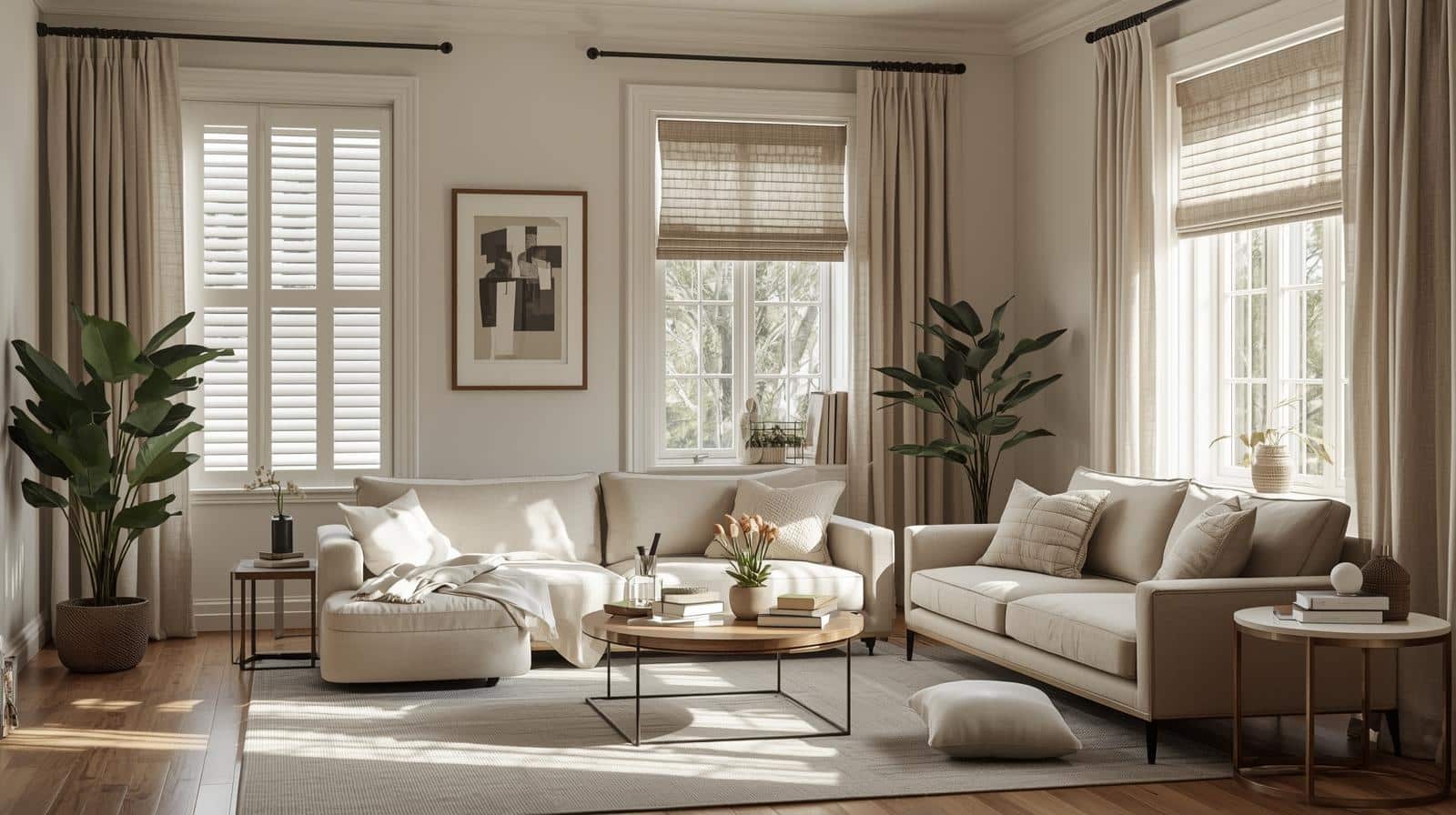
Layered Window Treatments: Sheers Over Blockouts
Layered curtains — a sheer on the front track over a blockout on the rear — give you filtered natural light during the day and full privacy and darkness at night. In Brisbane homes, this combination also provides a thermal buffer that reduces heat transfer through the window.
Layered curtains place a sheer fabric on the front track and a blockout fabric on the rear track. The sheer sits closest to the room. The blockout sits closest to the glass. During the day, you draw the sheer for soft, diffused light and daytime privacy. At night, you draw the blockout for complete darkness. The two layers operate independently, giving you precise control at any time of day.
Why a Layered Curtain System Works Better Than a Single Treatment
A single blockout offers only two states: full darkness or full brightness. There is no middle ground. A single sheer provides daytime privacy but fails completely at night — the fabric becomes transparent from outside once interior lights are on. Neither option alone handles every situation a room faces across a typical day.

Layering solves this. The sheer front layer diffuses harsh sunlight, softens the window’s appearance, and maintains privacy without blocking the room. The blockout rear layer provides complete darkness and full visual privacy when drawn. Together, they cover every scenario — morning light, afternoon glare, evening privacy, and night darkness — from the same window.
There is also an aesthetic dimension. A sheer floating in front of a concealed blockout creates depth and softness at the window. The result looks considered and intentional. At Complete Blinds Brisbane, this combination is one of the most consistently requested window treatment configurations across contemporary and traditional Brisbane homes alike.
Which Layer Goes Where in a Layered Curtain Setup — and Why It Matters
In Australian homes, the standard configuration places the sheer on the front track and the blockout on the rear track. The front track sits closest to the room. The rear track sits closest to the glass. This is the opposite of what some overseas guides recommend — and the difference matters.
When the sheer sits in front, it remains the visible feature throughout the day. The window holds a soft, light-filled quality. The blockout behind stays largely invisible when the sheer is drawn. This configuration suits contemporary and coastal Brisbane homes where an airy, open feel is the priority.
The alternative places the blockout in front and the sheer behind. The blockout becomes the dominant visual element. When open during the day, it stacks at the sides and reveals the sheer at the window. This approach suits formal rooms or bedrooms where darkness is the primary driver rather than daytime aesthetics.
Most homeowners prefer sheer-forward. The right choice depends on the room’s purpose and how often you need the blockout drawn. A consultant can walk through both configurations in your actual room before anything is ordered.
What Hardware Do You Need for Layered Curtains?
A double-track system is the standard hardware solution for layered curtains. Two parallel tracks mount at ceiling height. The rear track sits approximately 80–100mm in front of the glass. The front track sits further into the room. Each layer operates independently on its own track.

Ceiling mounting is strongly recommended. It creates a floor-to-ceiling effect, eliminates the light gap above the curtain, and gives the room a taller, more finished appearance. A pelmet or ceiling recess conceals both tracks entirely, producing a clean architectural finish.
A double rod is an alternative for a more traditional look. Two rods mount on separate brackets at different depths from the wall. This suits decorative rod systems on period homes or heritage Queenslanders where a concealed track would look out of place.
One requirement applies to either approach: both layers must operate independently. Tracks or rods that force both layers to draw together undermine the purpose of the system entirely.
Choosing the Right Sheer Fabric for Your Layered Curtain Front Track
The sheer fabric you choose for the front track determines the quality of filtered light and the level of daytime privacy. Not all sheers perform equally.
Voile and polyester linen-look fabrics provide soft, even diffusion with a subtle texture. These are the most common sheer choices in Brisbane homes. They handle the subtropical climate well — they resist UV fading and are straightforward to maintain. Natural linen sheers look beautiful but require more careful care in humid conditions.
UV protection varies across sheer fabrics. In Brisbane’s intense sun, a UV-rated sheer protects furniture, flooring, and artwork from fading. Look for fabrics that block 40–60% of UV radiation while remaining translucent. At Complete Blinds Brisbane, our team brings sheer fabric samples to your home during consultation so you can see the light quality in your actual room before committing.
Choosing the Right Blockout Fabric for the Rear Layer
The blockout fabric on the rear track is the functional workhorse of the system. Its job is to block light completely when drawn and to reduce heat transfer through the window in Brisbane’s climate.
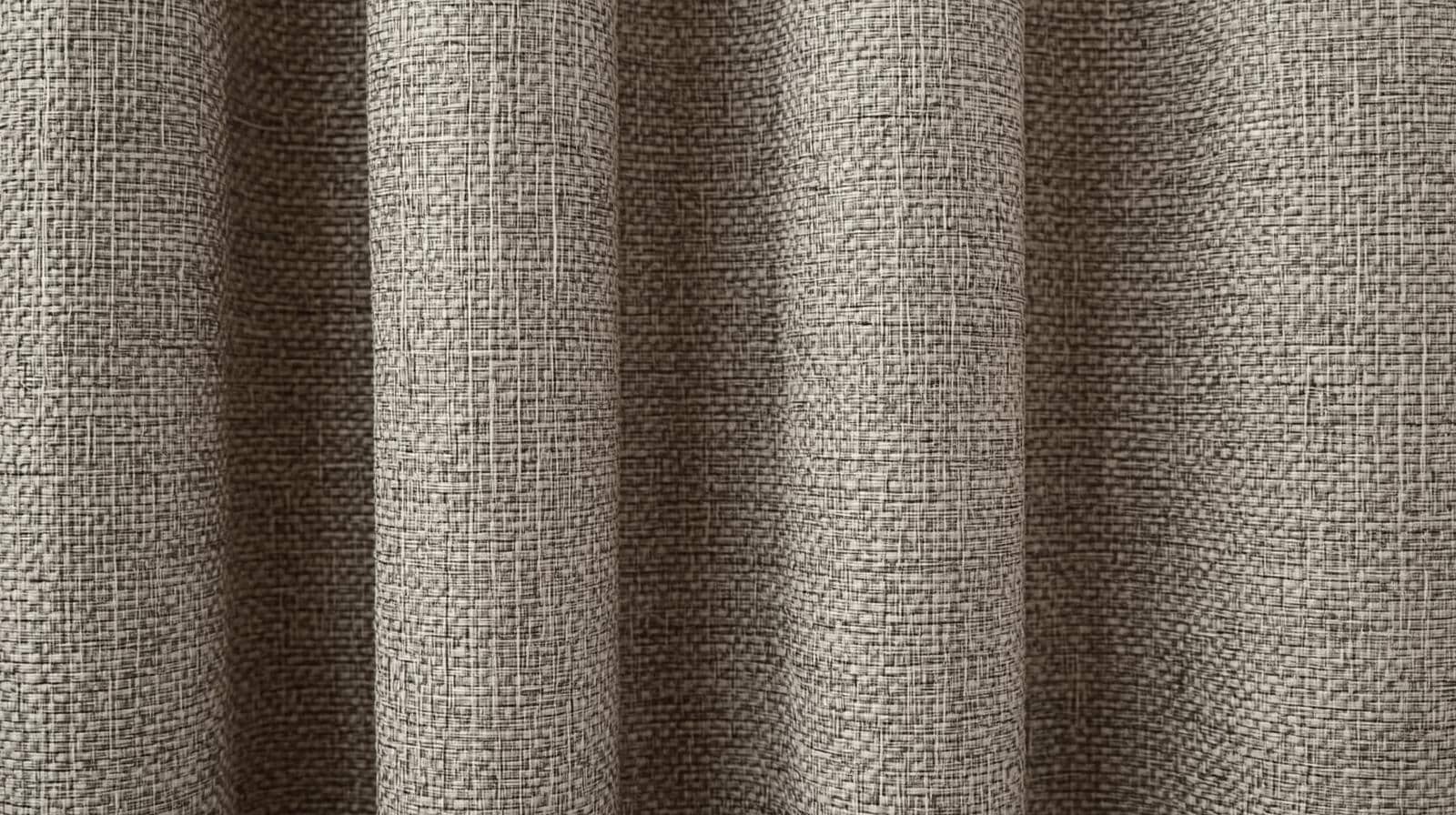
A foam-backed or triple-weave blockout fabric prevents virtually all light from passing through the fabric body. However, light gaps at the sides, top, and bottom often undermine performance more than the fabric itself does. Hanging the blockout track at ceiling height, extending it well past the window frame on each side, and using a weighted hem that grazes the floor all minimise these gaps significantly.
For Brisbane homes — particularly those with west-facing windows — choose a blockout fabric with a white or reflective backing on the glass-facing side. This backing reflects radiant heat before it enters the room. On west-facing rooms with significant afternoon sun exposure, it makes a measurable difference to comfort.
How Layered Curtains Help with Brisbane’s Heat and Humidity
This is the benefit most curtain guides omit entirely — and one of the most relevant for Brisbane homeowners.
When both layers are drawn, the air trapped between the sheer and the blockout forms an insulating buffer zone at the window. YourHome.gov.au, the Australian Government’s passive design resource, identifies still air gaps between window treatments and glass as a significant factor in reducing heat transfer. The principle mirrors that of double glazing — applied at the curtain level instead.
In summer, this air gap slows the rate at which external heat moves through the window into the room. In Brisbane’s milder winter months, it reduces heat loss at night. The practical result is a room that holds a more stable temperature with less demand on the air conditioner.
The wider the air gap between the tracks and the glass, the greater the insulating effect. Ceiling-mounted double tracks position both layers further from the glass than a standard wall-mounted bracket does. This is one reason they perform better thermally — not just aesthetically.
FREQUENTLY ASKED QUESTIONS
Do you put sheer curtains in front of or behind blockout curtains?
In Australian homes, sheer curtains typically go on the front track, closest to the room, with the blockout on the rear track, closest to the glass. This makes the sheer the visible feature during the day, softening the window’s appearance while the blockout behind remains mostly hidden. The result is an airy, light-filled room by day and complete privacy at night.
What hardware do you need to hang sheers and blockout curtains together?
A double-track system is the standard solution. Two parallel tracks are mounted at ceiling height, each operating independently so the sheer and blockout layers draw separately. A double rod on tiered brackets is an alternative for a decorative look on period homes. In both cases, the two layers must operate independently — hardware that draws them together defeats the purpose.
Does layering curtains help with heat in Brisbane?
Yes. When both layers are drawn, the air trapped between the sheer and blockout forms an insulating buffer that slows heat transfer through the window. This passive thermal benefit — the same principle as double glazing — is particularly valuable in Brisbane’s west-facing rooms where afternoon heat is most intense. A wider air gap between the tracks and the glass increases the effect.
What is the best sheer fabric for Brisbane’s climate?
Polyester voile and polyester linen-look fabrics perform best in Brisbane’s subtropical conditions. They resist UV fading, handle humidity well, and are easy to maintain. Natural linen sheers are beautiful but require more care in humid environments. Look for a fabric that blocks 40–60% of UV radiation while remaining translucent — this protects furniture and flooring without darkening the room.
Can layered curtains work in a bedroom?
Yes — and they work particularly well in master bedrooms. The sheer provides a soft, filtered light quality during the morning. The blockout layer delivers complete darkness for sleep and full visual privacy at night. Ceiling-mounted double tracks with a weighted blockout hem that grazes the floor minimise light gaps and maximise the system’s performance in a sleep environment.

Related Posts


Comments (0)