
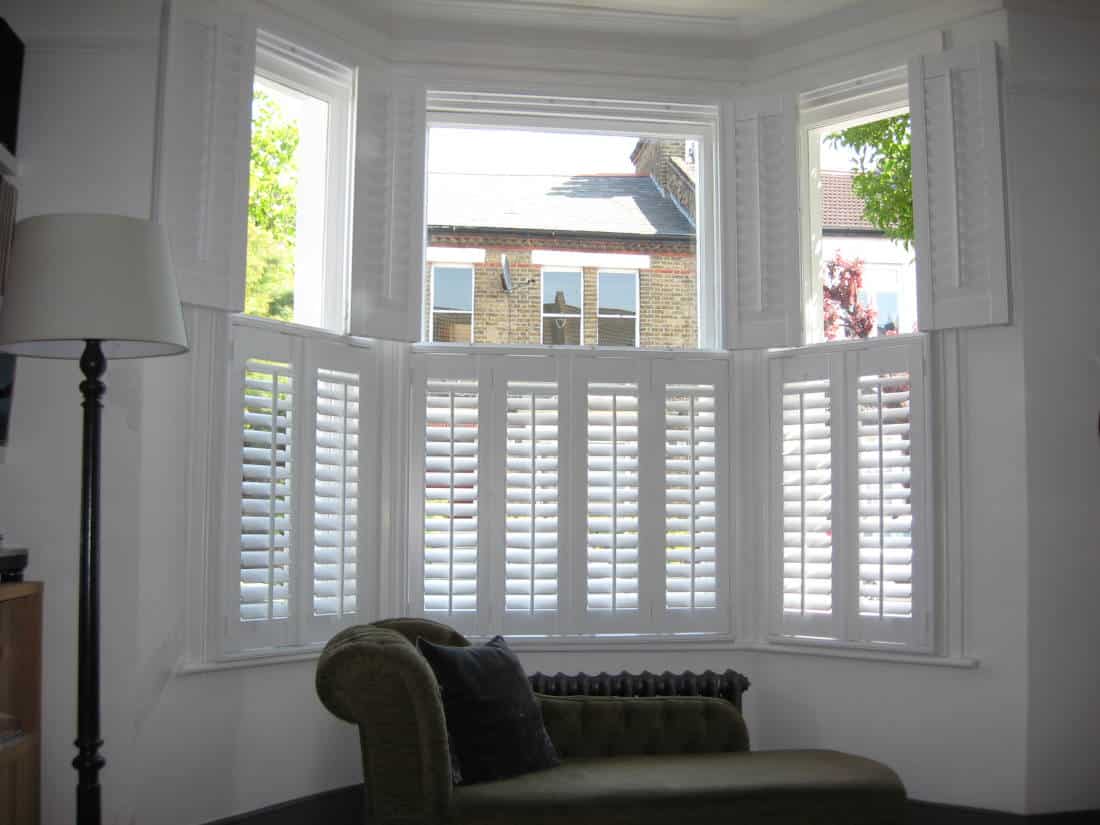
Shutters for bay windows need each angled section measured and fitted separately, with matching returns…

Shutters for Sliding Doors: Glide, Stacking, and Clearances
Shutters can work beautifully on sliding doors when the track setup, stacking position, and clearances are planned properly. The right material choice also matters for wide openings and everyday use.
Are shutters a good idea for sliding doors?
Shutters are a great option when you want a tidy finish that doesn’t flap, pool on the floor, or feel messy near a high-traffic doorway. They also suit modern interiors because they look structured and intentional.
 However, the success comes down to usability. If the shutters don’t glide easily, or if they stack in the wrong place, they can become annoying. So, the question isn’t only “Can you do it?” It’s “Can you do it in a way that feels effortless?”
To see shutter options and examples, start here: plantation shutters.
How sliding door shutters work
Shutters for sliding doors typically use panels that move along a track. Instead of swinging open into the room, the panels slide sideways. This matters because it helps keep walkways clear.
“Stacking” simply means where the panels sit when you open the doorway. Depending on your layout, panels may stack to one side, split to both sides, or stack away from the main traffic zone.
The best stacking plan depends on how you use the door. For example, if you mainly enter from one side, stacking panels to the other side can keep the pathway clearer. As a result, daily movement feels easier.
Clearances that matter: what can get in the way
Clearances are the small spacing details that determine whether shutters feel smooth or frustrating. While every home is different, there are three practical clearance areas people notice most.
First is door handles and locks. If a handle protrudes, the shutter panel needs to clear it comfortably. Otherwise, panels can bump or sit awkwardly.
Second is floor space. Sliding doorways often connect to busy areas, so you want panels to stack without creating a pinch point. That’s why stack location planning is so important.
Third is opening direction and traffic flow. Even if the shutters technically fit, they still need to make sense for how your household moves through the space.
If you want a “clean lines” approach with careful fit planning, inside-mount concepts can be helpful to understand: inside mount shutters.
Track options: what changes day to day
Track setups vary depending on the doorway and the panel layout. Some solutions rely mainly on a top track, while others use a floor guide or additional support, depending on the span and use.

The practical goal is always the same: panels should glide smoothly and feel stable. In busy households, that stability matters because doors are used constantly. As a result, the “right” track approach is the one that supports daily use without feeling heavy.
Even if you’re not sure what track you need, you can still decide the important parts first. Start with where you want the panels to stack and how wide the clear opening needs to be.
Choosing materials for large sliding door openings
Complete Blinds Brisbane offers several shutter material options, and material choice becomes more important as openings get wider.
For example, the plantation shutters page notes Brightwood has lighter panels that allow for wider spans, which can be useful for large doors. It also references Luxaflex Polysatin shutters being shown over glass sliding doors and being water-resistant, which can matter in homes that connect to outdoor areas.
The right material is the one that suits the room’s conditions and the doorway’s size. If the area gets moisture or heavy use, durability and easy cleaning become more important. Meanwhile, if the opening is very wide, weight and panel behaviour can become a bigger factor.
Light and privacy control in open-plan living
Sliding doors often flood living rooms with light. That’s great, yet it can also create glare, heat, and privacy concerns—especially in the afternoon.

Shutters give you flexibility because you can adjust louvres for privacy while still allowing light through. As a result, you can keep the space feeling open without feeling exposed.
This also helps when you want different moods through the day. You might want more openness in the morning, then more privacy in the evening. Shutters can support that change without needing to fully open or close a curtain.
Measuring and install planning: the step that makes it work
Shutters for sliding doors are not a “guess and hope” product. To get the right glide, stacking, and clearances, measuring and planning are essential.
Complete Blinds Brisbane offers a free consultation via their quote process, which is the easiest way to confirm what’s possible for your doorway. If you want clarity on the best panel layout and stacking plan, request a free measure and quote.
If you’re also comparing frames and louvre sizing across different windows in the home, this guide may help your planning: fit types, frames, and louvre sizes.
Frequently Asked Questions
Can plantation shutters be installed on sliding doors?
Yes. Shutters can be configured for sliding door openings using track-based panel systems.
What does “stacking” mean for sliding door shutters?
It refers to where the shutter panels sit when the door is open, such as stacked to one side or split to both sides.
Will shutters block the doorway opening?
They can if the stacking plan isn’t designed well. Proper planning helps keep the clear opening practical for everyday use.
Do I need to worry about door handles and locks?
Yes. Handles and locks can affect clearances, so they should be considered during measuring and layout planning.
What’s the best way to choose the right shutter layout?
Start with how you use the doorway and where you want panels to stack, then confirm measurements with a professional consult.

Related Posts
Comments (0)