
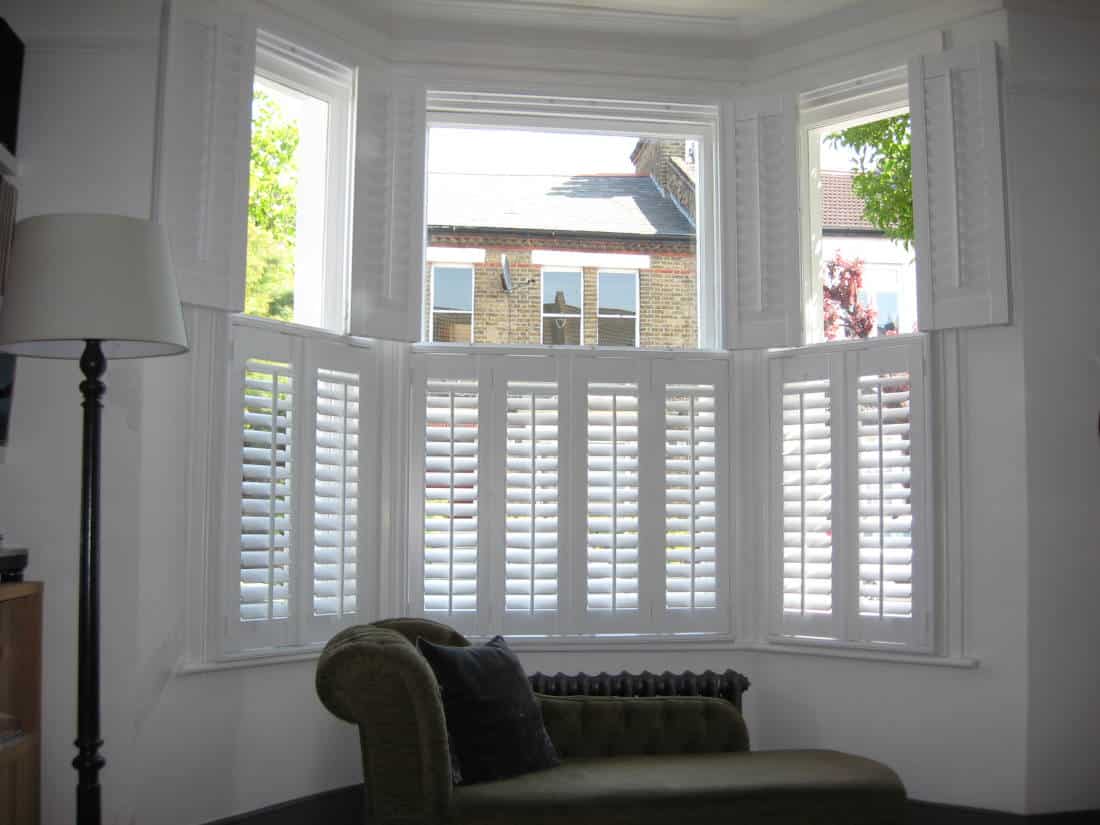
Shutters for bay windows need each angled section measured and fitted separately, with matching returns…

Shutters for Sliding Glass Doors: Tracks vs Bypass Explained
Track shutters slide along a single rail and stack to one side. Bypass shutters use two separate rails so panels can pass each other. The best choice depends on door width, how much clear opening you need, and where the panels can stack.
Why sliding glass doors need a different shutter approach
Standard hinged shutters work well for windows. However, a sliding glass door presents a different challenge. The door is wider, usually a main thoroughfare, and needs to stay fully functional when open.

If shutter panels swing into the room, they take up floor space and block movement. A gliding system solves that because panels move parallel to the door rather than out into the room. As a result, the space stays clear and the doorway stays practical.
Start with the plantation shutters range to compare materials and styles before deciding on a system.
What is a bypass shutter system?
A bypass system uses two rails — one in front of the other. Each set of panels sits on a separate rail. When you open the door, the front panels slide to one side while the back panels slide in the opposite direction. They “bypass” each other rather than stacking on the same side.
This approach works well for wider openings. Because panels distribute across two rails, no single side needs to absorb all the stack. The doorway stays more evenly balanced and the opening can feel cleaner.
The trade-off is depth. Two rails sitting front to back require more space between the shutter and the door glass. In rooms where every centimetre of depth counts, that’s worth checking during the measure.
What is a tracked shutter system?
A tracked system uses a single rail. All panels slide along the same track and stack to one side (or split to both sides, depending on the design). Unlike bypass, there’s no front-to-back depth requirement from the rail system itself.

Single-track systems tend to suit narrower openings where the stack can sit neatly beside the door. They also create a cleaner profile from the side because there’s only one rail to account for.
On wider doors, a single-track stack can become bulky. All panels pile on the same side, which can reduce the clear opening or create an awkward visual weight in one corner.
Bypass vs track: how to choose for your door
The decision comes down to three practical questions. First, how wide is the door? Wider openings often suit bypass because it distributes the panel stack across both sides. Narrower doors can work well with a single-track system.
Second, where can the panels stack? If space exists on both sides of the door, bypass gives you flexibility. If one side has a wall or a piece of furniture that limits the space, a single-track stack to the open side can work better.
Third, how deep is the reveal? Bypass needs slightly more front-to-back depth. A single-track system can sit in a shallower reveal. Confirming that during a professional measure avoids surprises on installation day.
Panel width, stacking, and the clearances that matter
Panel width affects how shutters for sliding glass doors sit and feel in everyday use. Narrower panels create more flexibility. They stack more compactly and leave a larger clear opening when the door is in use.
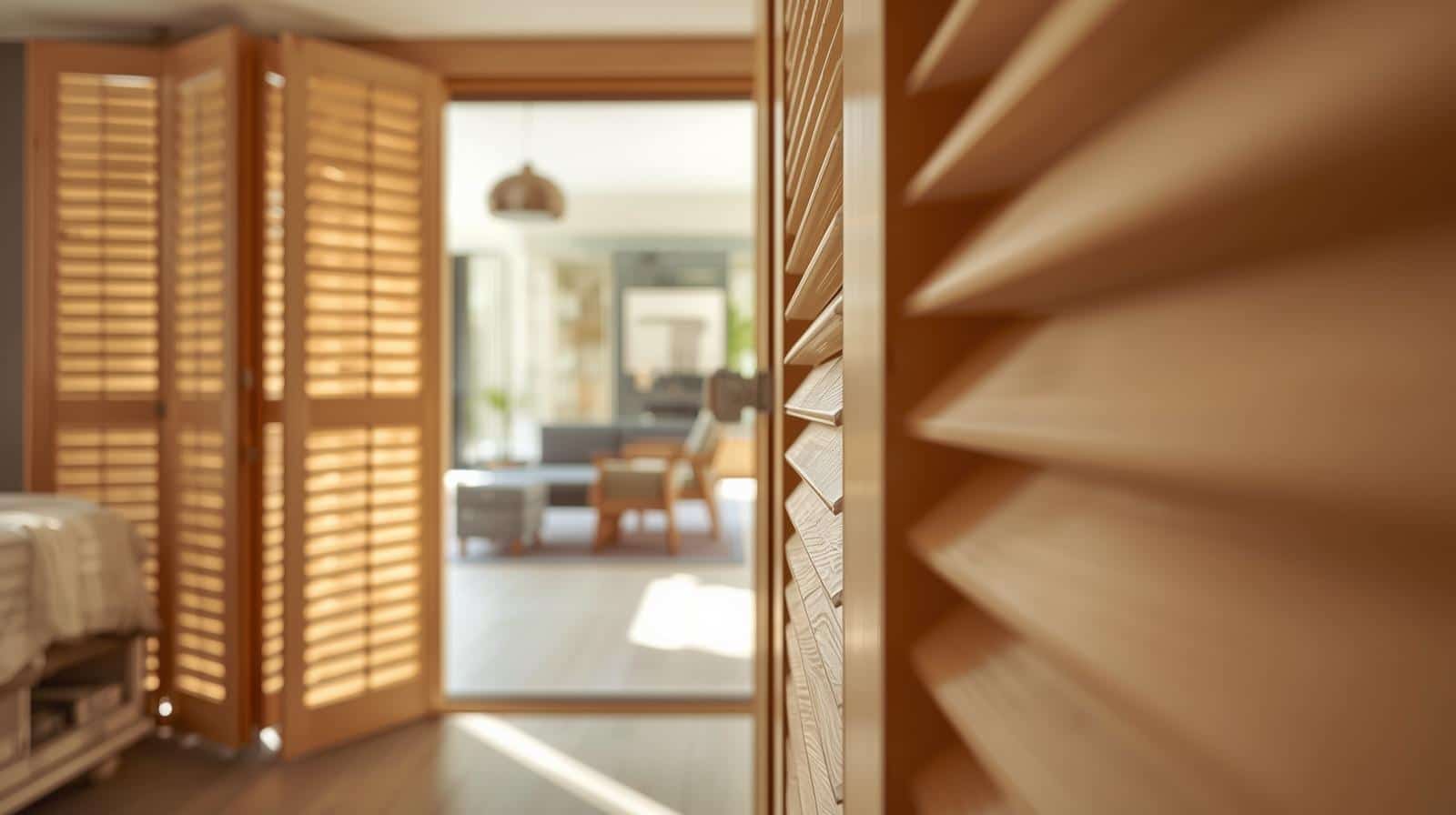
Wider panels can look more considered and architectural. However, they stack more thickly, so the clear opening shrinks. For a busy family door used multiple times a day, compact stacking usually wins.
Clearances around handles, floor guides, and adjacent walls all need checking before the system is confirmed. A handle that sits proud of the door frame can catch a panel mid-slide. A floor guide in the wrong position can restrict movement. Identifying those issues during the measure means they get resolved before installation rather than after.
For a clean, built-in look that suits the door reveal properly, inside-mount concepts are worth exploring: inside mount shutters.
Material choices for sliding glass door openings
Material selection matters more on sliding glass doors than on windows. Doors connect indoor and outdoor spaces, so they often face more moisture, temperature change, and daily traffic than a fixed window would.
Complete Blinds Brisbane references Brightwood as a premium hardwood option with lighter panels suited to wider spans. Lighter panels glide more smoothly, which matters when the same panels are opened and closed multiple times daily.
Luxaflex Polysatin shutters appear on the plantation shutters page covering glass sliding doors and are described as water-resistant. That makes them a practical option where the door connects to a wet outdoor area or experiences moisture exposure.
For low-maintenance performance across all conditions, this article is a useful resource: internal shutters: privacy, insulation, and low maintenance.
Louvre size and light control for large doors
Larger louvres suit sliding glass doors well. Wide doors have a lot of glass to manage, and bigger louvres adjust light and privacy across that span more effectively than narrow ones.
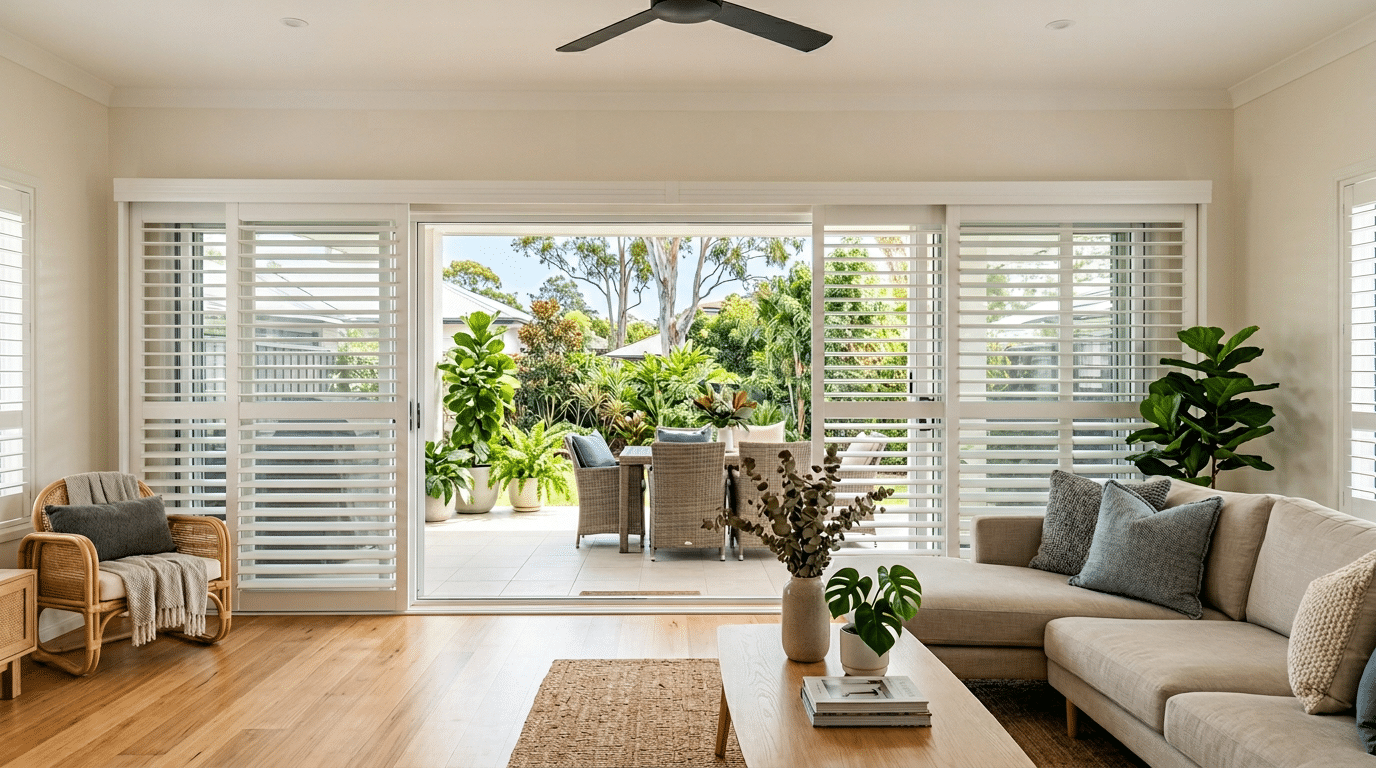 Wider louvres also tend to look more proportionate on large openings. Narrow louvres on a full-height sliding door can feel busy. The louvre size choice is part of the overall design decision, not just a functional one.
When the door connects to an outdoor entertaining area, the ability to tilt louvres for privacy without fully closing the shutter can also help. You can maintain airflow and partial view while still controlling what neighbours or passers-by can see.
Frequently Asked Questions
What is the difference between a bypass and a track shutter system?
A bypass system uses two rails so panels can slide past each other. A track system uses one rail and panels stack to one side.
Which system suits a wide sliding glass door better?
Bypass systems often suit wider doors because they spread the panel stack across both sides, keeping the clear opening larger.
How much depth does a bypass shutter system need?
Bypass requires slightly more front-to-back depth than a single-track system because two rails sit one in front of the other. A professional measure confirms whether your reveal can accommodate it.
What shutter material is best for sliding glass doors near outdoor areas?
Moisture-resistant options like Luxaflex Polysatin suit doors that connect to outdoor or wet areas. Brightwood suits wider spans where lighter panels improve daily operation.
Do shutter panels affect how much of the doorway stays clear when open?
Yes. Narrower panels stack more compactly and leave a larger clear opening. Wider panels look more architectural but reduce the clear opening when stacked.

Related Posts
Comments (0)