
Window roller blinds handle heat and UV differently depending on openness factor, backing, and colour…

Roller Blinds for Windows: Sizing, Brackets, and Installation Basics
Getting roller blinds right comes down to three decisions: inside or outside mount, accurate measurement, and the correct bracket for your wall type. Each affects how the blind looks, how much light it blocks, and how well it operates long term.
Sizing and installing roller blinds involves choosing between an inside or outside mount, measuring accurately at multiple points, and matching your bracket choice to the wall surface. In Brisbane homes, these decisions matter more than most guides suggest. Queenslander timber frames, modern aluminium window frames, and brick cavity walls each behave differently. A blind that is even 5mm too wide will bind inside the recess. One anchored poorly into soft plasterboard will eventually fail.
Inside Mount vs Outside Mount — Which Should You Choose?
The first decision is where the blind sits. Does it go inside the window recess, or does it mount on the wall above? Both approaches work well. They deliver different results, however.

An inside mount positions the blind within the window frame. It gives a clean, minimalist appearance and shows off the architrave. This suits modern Brisbane homes where the window framing is a design feature. The trade-off is a small side gap — approximately 15–20mm on each side — where the brackets require a deduction in fabric width. For light control in living areas, that gap is acceptable. In a bedroom needing complete darkness, it is worth noting.
An outside mount places the blind on the wall or architrave above the window. It covers the full frame and extends beyond it, reducing light gaps significantly. Outside mounts are the better choice for blockout applications. They also suit windows with shallow recesses that cannot accommodate the roller mechanism. Additionally, they make a window appear larger — useful in smaller rooms.
Outside mounts are more forgiving of irregular or out-of-square windows. This is something found more frequently in older Brisbane homes.
The minimum recess depth for a standard inside mount is 60mm. If your recess is shallower than that, the roller mechanism will project forward of the frame. In that case, an outside mount is the practical solution.
How Do You Measure a Window for Roller Blinds?
Accurate measurement is the most important step in the entire process. Most installation problems — binding, uneven hang, visible gaps — trace back to measurement errors, not installation errors.
Measuring for an Inside Mount
Measure the width at three points: top, middle, and bottom of the recess. Windows are rarely perfectly square. This is especially true in older Brisbane Queenslander homes, where timber frames move with humidity and age. Always use the narrowest of the three measurements to ensure the blind fits without binding.
Next, measure the height from the top of the recess to the sill at both sides. Use the shorter of the two measurements.
When you order, provide the actual recess measurements. The manufacturer applies the deduction for brackets automatically. Do not reduce the measurement yourself — double-deducting is a common DIY error.
Measuring for an Outside Mount
For an outside mount, measure the total width you want the blind to cover. Standard practice is to extend 50–100mm beyond the window frame on each side and 50–70mm above the frame. This overlap reduces light bleed at the edges and gives the window visual weight.
Measure the drop from the planned bracket position to where you want the bottom of the blind to finish.
At Complete Blinds Brisbane, we recommend using a steel tape measure. Fabric tapes and flexible rules can give readings 3–5mm out over a standard window width. That error seems minor. However, it affects whether the blind moves smoothly or rubs against the frame.
Front Roll vs Back Roll — What Does It Mean and Why Does It Matter?
Roll direction is a detail most homeowners overlook at the time of ordering. Many regret it afterwards.
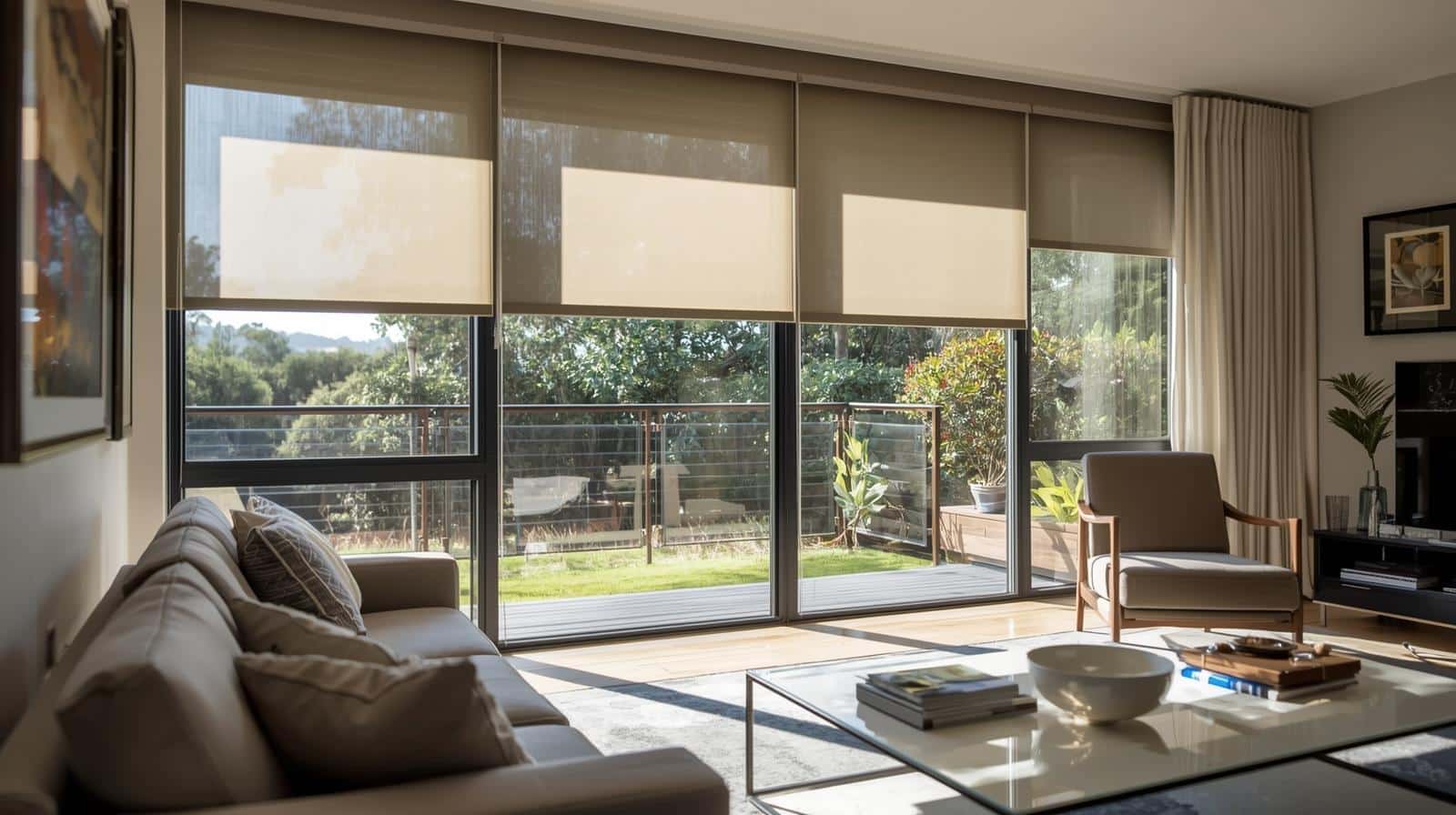
A front roll means the fabric unrolls forward, away from the wall. The face of the fabric is visible at all times. This is the standard choice for most applications, and the control chain hangs clear of the fabric for straightforward operation.
A back roll means the fabric unrolls towards the wall, sitting closer to the glass. This reduces the light gap at the top of the blind and improves light control in blockout applications. Back roll is particularly effective in bedrooms.
There is one trade-off to note. The chain falls behind the fabric, making operation slightly less intuitive. Additionally, if the backing fabric is a different colour to the face — common with reflective blockout backing — that backing will be visible at the roll.
In most Brisbane living areas, front roll is the right default. For bedrooms where maximum light control matters, back roll into the recess is worth discussing with your installer.
Understanding Roller Blind Brackets
Roller blind brackets clip onto the ends of the roller tube and fix it to either the inside of the recess, the architrave, or the wall. Most standard blinds come with two brackets — a pin-end bracket and a clutch-end bracket. For wider blinds over approximately 2.4m, add a centre support bracket. Without one, the roller sags over time.
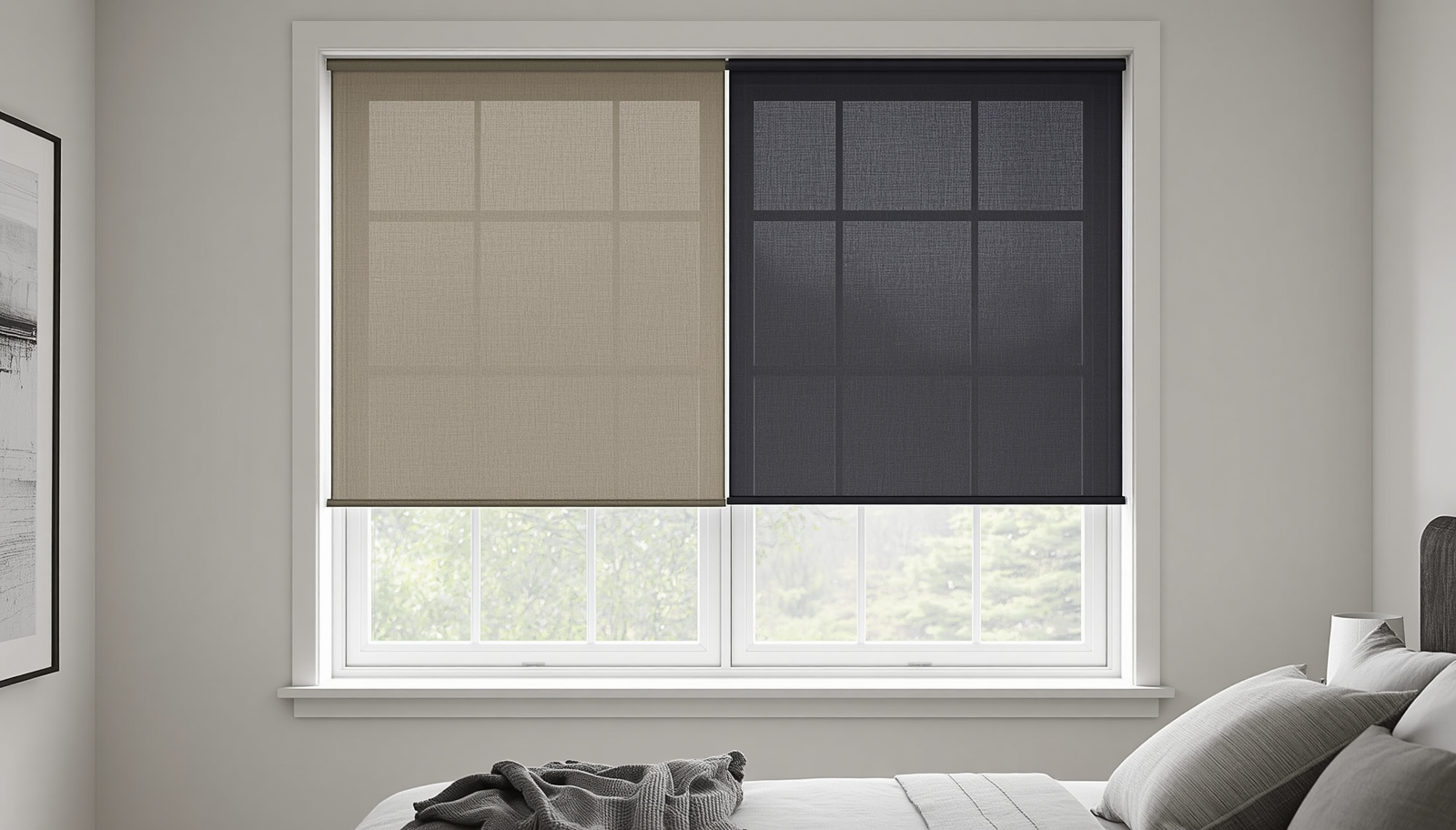
The fixing method depends entirely on your wall type. In Brisbane homes, three common scenarios arise.
Timber frames — including the hardwood frames typical of older Queenslanders — are the most forgiving surface. Standard wood screws hold firmly, and pre-drilling with a thin wood bit prevents splitting.
Aluminium window frames are common in modern Brisbane homes and require careful handling. Over-tightening screws strips the aluminium thread. Professionals use correctly sized fasteners and controlled torque. Inside mounting directly into an aluminium frame is best left to an experienced installer.
Brick and render walls need a masonry drill bit and correctly sized wall plugs. Maintain at least 50mm clearance from the edge of the brickwork. Plasterboard-lined walls need toggles or anchor bolts — standard screws driven into plasterboard without a stud will not hold the blind reliably over time.
Child safety regulations under AS/NZS 4485 require that looped cords and chains are secured with a wall-mounted cord cleat or tensioner. This is a compliance requirement for all new window blind installations in Australia. Cordless and motorised systems eliminate this requirement entirely.
What to Know About Installation Before You Start
At Complete Blinds Brisbane, every installation is carried out by our own trained craftsmen — never sub-contractors. The measure, the product, and the installation are all managed by the same team. Problems are caught before they become errors, not discovered after the blind is already up.
For fabric and style options suited to Brisbane windows, explore the roller blinds range or browse the complete custom blinds collection. For motorised options that eliminate cord safety concerns, see motorised roller blinds. If you are also considering window furnishings for other rooms, the Window Blinds 101 guide covers how to match blind styles to each room in a Brisbane home.
FREQUENTLY ASKED QUESTIONS
How do you measure a window for roller blinds?
Measure the width at three points — top, middle, and bottom — then use the narrowest measurement. For an inside mount, provide the exact recess width and let the manufacturer apply the bracket deduction. An outside mount requires 50–100mm overlap added to each side of the frame. Always use a steel tape measure for accuracy.
What is the difference between inside and outside mount roller blinds?
An inside mount sits within the window recess for a clean, minimalist look. Covering the full frame and extending beyond it, an outside mount reduces light gaps and suits shallow recesses. This makes outside mounts the better choice for blockout applications, bedrooms, or any window where complete light control is the priority.
How do you fit roller blind brackets?
A: Mark bracket positions with a pencil and use a spirit level to confirm alignment. Timber frames require pre-drilling before securing with the supplied screws. For brick or render, use a masonry bit and wall plugs. Aluminium frames need correctly sized fasteners — avoid over-tightening, as this strips the thread. Most standard roller blinds include two brackets: a pin-end bracket and a clutch-end bracket.
What is the difference between front roll and back roll on a roller blind?
Front roll means the fabric unrolls away from the wall, with the chain hanging clearly in front for easy operation. Back roll positions the fabric closer to the glass, reducing the light gap at the top of the blind. This makes back roll the better choice for blockout bedroom applications where maximum light control matters.
Can I install roller blinds myself?
Standard inside-mount installs in timber frames are within most confident DIY capabilities, provided measurements are accurate. Aluminium frames, motorised systems, large blinds over 2.4m wide, and outside mounts into brick are all better handled professionally. Regardless of who does the install, accurate measuring before ordering is the single most important step.

Related Posts

Comments (0)