
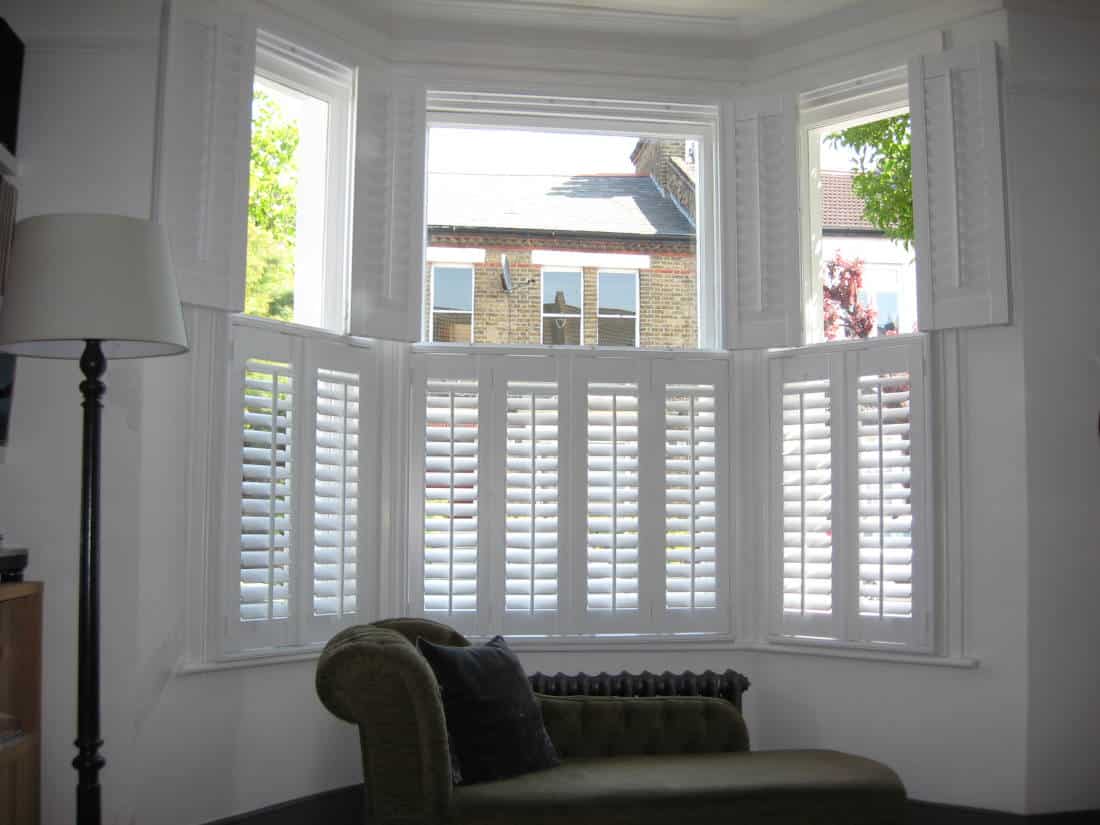
Shutters for bay windows need each angled section measured and fitted separately, with matching returns…

Sliding Plantation Shutters: Space-Saving Light Control
Sliding plantation shutters move along a track rather than swinging open. They suit wide openings, stacker doors, and room dividers where hinged panels cannot swing freely. They deliver the same precise louvre-based light control as standard plantation shutters.
Sliding plantation shutters are one of the most space-efficient window treatment options for Brisbane homes. They run on a ceiling or frame-mounted track. Panels glide horizontally rather than hinging open. This makes them the practical solution for wide stacker doors, sliding glass doors, and large window banks common in modern Queensland homes. Like all plantation shutters, they give you continuous, adjustable light control through tilting louvres — without cords, chains, or fabric.
How Sliding Plantation Shutters Work
Sliding plantation shutters mount on a horizontal track fixed above the opening. Panels hang from the track and glide left and right on wheeled carriers. When you want access to the door or a fully open view, panels slide to one or both sides. When closed, they cover the full opening. You control light by tilting the louvres.
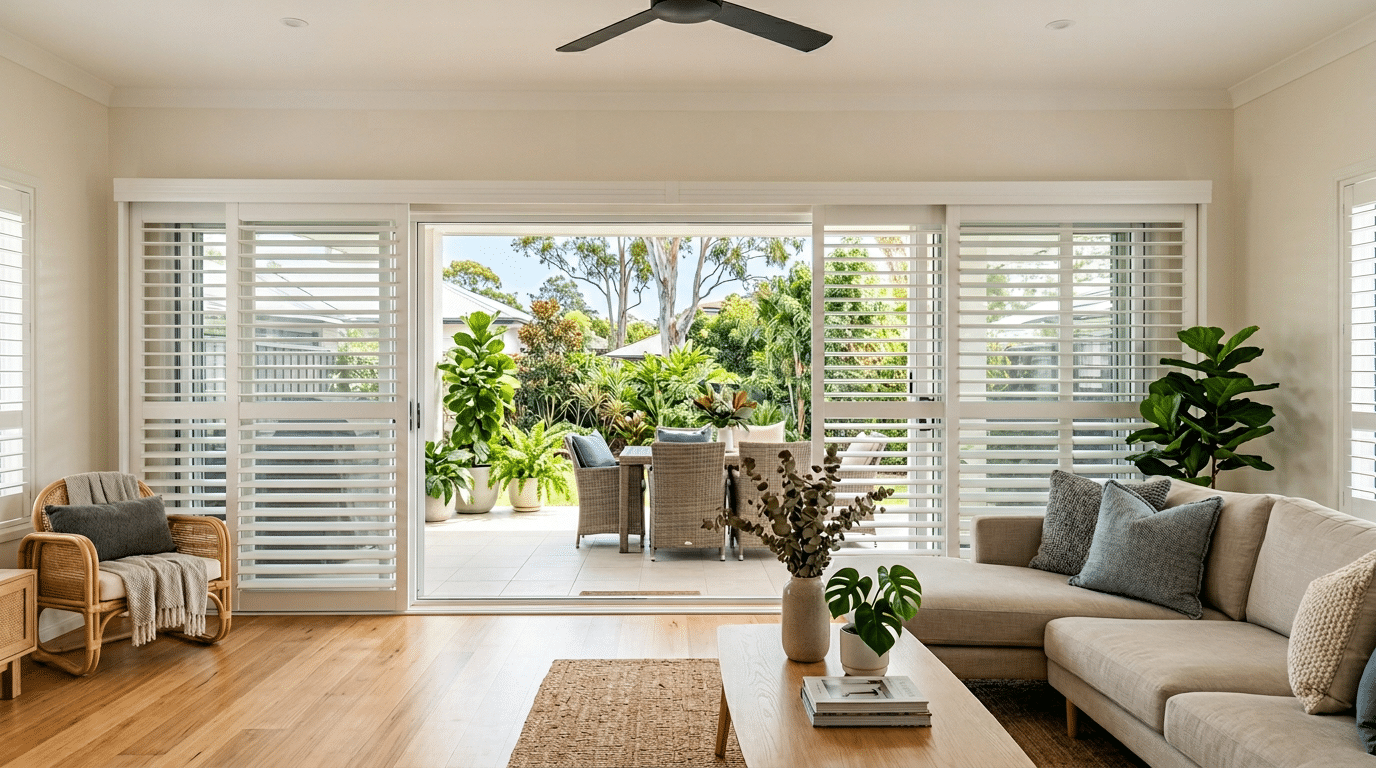
The key advantage over hinged shutters is the swing clearance they eliminate. A hinged shutter panel on a 2.4m door requires a clear arc of swing space into the room. That arc is typically equal to the panel width. On a sliding door positioned behind a sofa or kitchen bench, that space simply does not exist. Sliding shutters solve this directly. Panels stay on the track at all times and never project into the room when moving.
Two track systems exist for sliding plantation shutters: bypass and bifold. The right choice depends on how much wall space sits beside the opening.
Bypass Track vs Bifold Track — Which Suits Your Opening?
Bypass Track Shutters
A bypass track system uses two or more parallel tracks. Panels glide past each other on separate rails — they overlap rather than stack. This design suits wide openings and situations where wall space beside the door is limited. Panels never leave the track run. Even a narrow wall section accommodates them.
Bypass shutters suit standard two-panel sliding doors and wider stacker door configurations. In Brisbane homes with a living area opening directly to an alfresco or deck, bypass shutters allow partial opening. Slide one panel to reveal half the door — without clearing the full opening every time. The trade-off is that two overlapping panels reduce the visible glass area. However, when louvres are angled open on both panels, outward visibility across the full width remains very good.
Bifold Track Shutters
A bifold track system hinges panels together in pairs. When you open the shutters, panels fold accordion-style and stack compactly against one or both sides. This clears more of the glass area than a bypass configuration. It also gives a wider physical opening — useful when you frequently move furniture or want the indoor-outdoor connection to feel fully open.
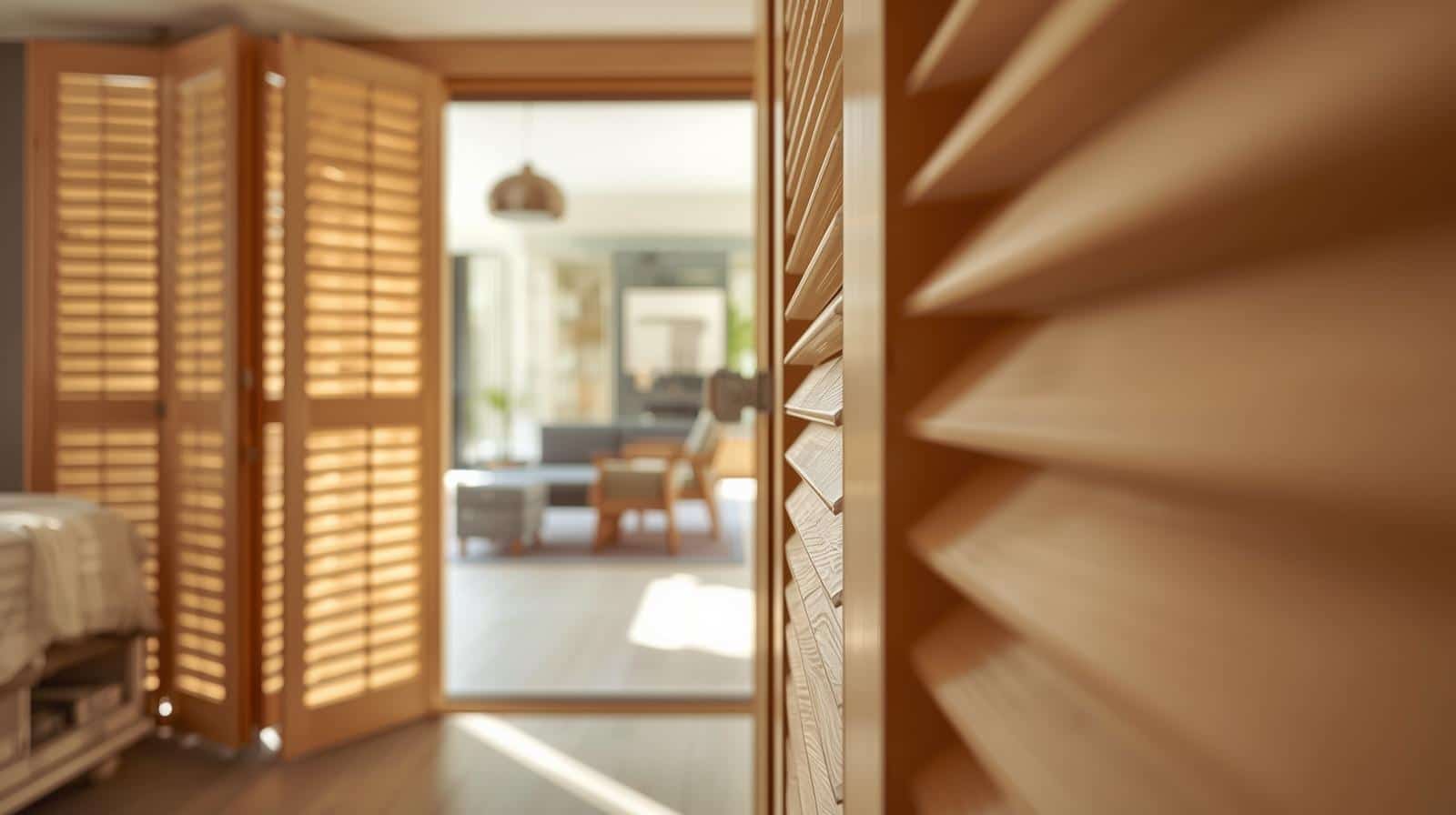
Bifold shutters require wall space beside the opening to accommodate the folded stack. For a 2.4m wide opening covered by four 600mm panels, each stacked pair needs approximately 300–350mm of clear wall space to fold into. At Complete Blinds Brisbane, we check this stacking clearance at the measure stage before any configuration is confirmed. It is the most common reason a homeowner’s first preference shifts from bifold to bypass during consultation.
Which Openings Suit Sliding Plantation Shutters Best?
Sliding plantation shutters work well across several opening types common in Brisbane homes.
Standard sliding glass doors — typically 1.8m to 2.1m wide — suit a simple two-panel bypass configuration. Panels operate smoothly. Louvre control works independently on each panel. No additional wall space is needed beyond the door frame.
Stacker doors suit bifold configurations where wall space allows. The wider the opening, the more compelling bifold’s clear-opening capability becomes. For a 4m or 5m stacker door, bifold shutters folding fully to one side create the seamless indoor-outdoor connection that defines Brisbane’s alfresco living style.
Wide Windows and Room Dividers
Large fixed windows and wide window banks are a less obvious but highly effective application. Sliding shutters on a wide window give precise louvre control across the full width. They also let you clear the glass entirely on sunny mornings — without any panel swinging into the room.
Room dividers are another popular Brisbane application. This is particularly true in open-plan homes where a flexible partition between living and dining areas is useful. Sliding plantation shutters on a ceiling-mounted track create a divider that controls both light and privacy between spaces.
Light Control and Louvre Sizes for Sliding Shutter Panels
Sliding plantation shutters deliver the same louvre-based light control as any plantation shutter. Tilting the louvres controls the angle of incoming light, the level of view-through from outside, and the degree of airflow through the panel.

Wider louvres — 89mm or 114mm — suit contemporary Brisbane homes. They create fewer visual lines across the panel. They also maximise the view when open and allow generous airflow. Narrower louvres — 63mm — suit traditional or heritage-style homes. They provide slightly tighter light control between positions. For wide stacker doors, 89mm or 114mm louvres are generally the more appropriate choice.
In Brisbane’s high-UV summers, angling louvres at roughly 45 degrees intercepts direct solar radiation before it heats the room. Diffused natural light still enters. This is one of the key thermal advantages plantation shutters hold over curtains or blinds. Unlike those options, louvres provide many positions between fully open and fully closed.
Material Choices for Sliding Plantation Shutters in Brisbane
The material you choose affects long-term performance in Brisbane’s subtropical conditions.
Composite timber shutters — such as the Woodlore range — combine a timber-look face with a moisture-stable core. They suit living areas and bedrooms adjacent to the outdoors. They handle Brisbane’s humidity without the warping risk of solid timber. Their weight suits sliding track systems. They also hold louvre tension well over time.
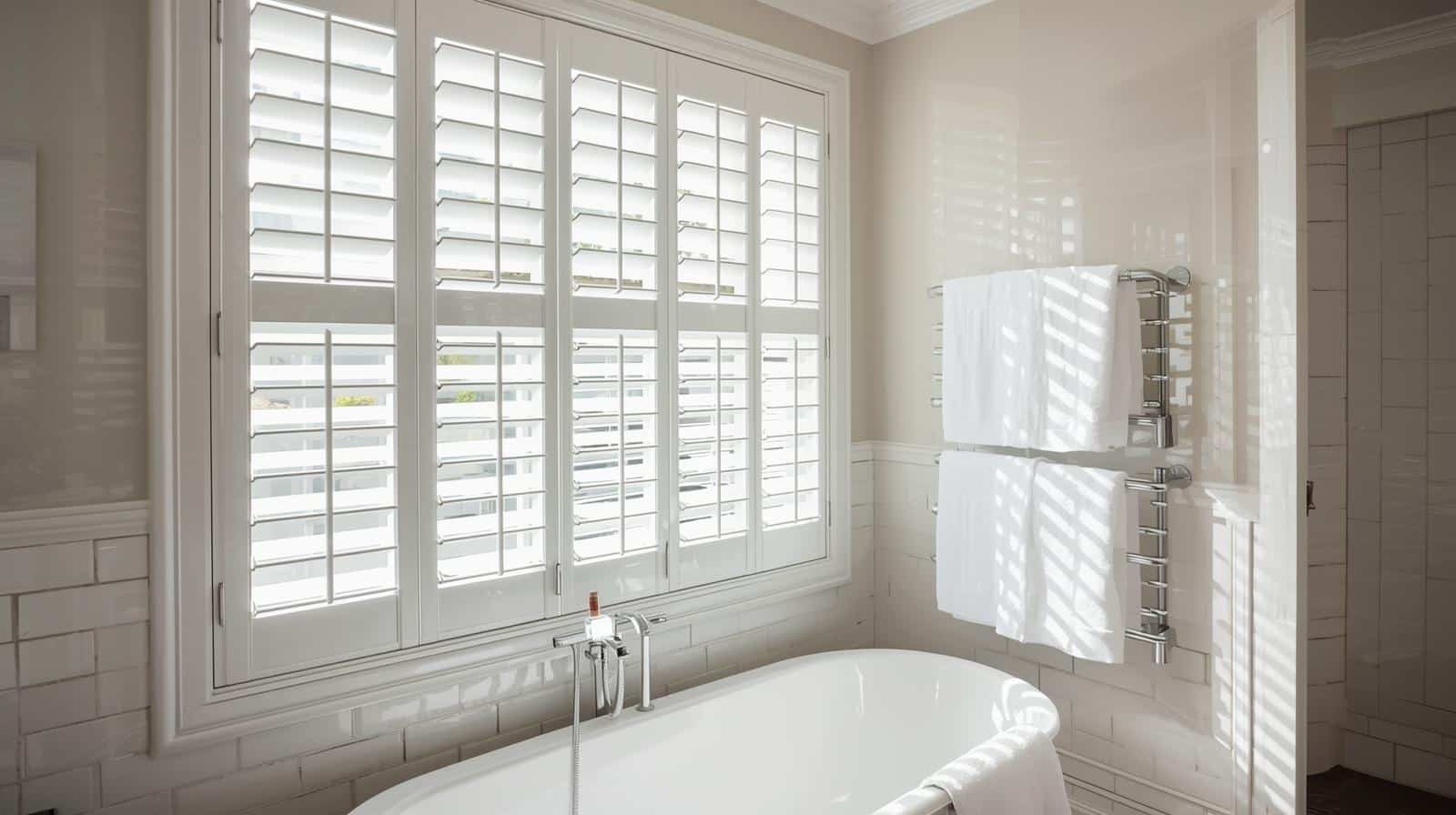
PVC shutters are the right choice for any opening with significant moisture exposure. Covered alfresco areas, laundries, and rooms prone to condensation all benefit. PVC is completely moisture-resistant and wipes clean with minimal maintenance. For large stacker door openings, PVC’s lighter weight also reduces the load on track hardware over time.
Explore the full Complete Blinds Brisbane plantation shutters range to compare materials and configurations. For guidance on how sliding and bifold configurations compare with hinged options across every room type, the plantation shutters Brisbane buyer’s guide covers configurations in detail. If you are also considering other window coverings for wide sliding or stacker door openings, the window coverings for sliding doors guide compares plantation shutters with vertical blinds and panel glide blinds side by side. For material comparisons and what suits Brisbane’s climate best, the plantation shutters materials and pricing guide is a practical next step.
FREQUENTLY ASKED QUESTIONS
What are sliding plantation shutters?
Sliding plantation shutters run on a horizontal track above the opening, with panels that glide left and right rather than swinging open. As a result, they suit wide sliding doors, stacker doors, and large windows where hinged panels cannot swing freely. They also deliver the same adjustable louvre-based light control as any plantation shutter.
What is the difference between bypass and bifold plantation shutters?
Bypass shutters slide panels past each other on parallel tracks and therefore need no additional wall space beside the opening. Bifold shutters, however, fold accordion-style to one or both sides — clearing more glass but requiring stacking space beside the door. Consequently, bypass suits limited wall space, while bifold suits wide stacker doors where a full open position is the priority.
How much wall space do sliding plantation shutters need?
Bypass configurations need no extra wall space, since panels slide within the existing track run. Bifold configurations, however, need approximately half the total panel width as stacking clearance on each side. For a 3m opening stacking to both sides, therefore allow roughly 750mm of clear wall on each side. A site measure confirms exact clearances.
Can plantation shutters work as room dividers?
Yes — sliding plantation shutters on a ceiling-mounted track create a flexible partition that controls light and privacy between spaces. This makes them particularly useful between living and dining areas, or to close off a home office. Furthermore, the track can be designed to allow full retraction to one side when the partition is not needed.
What material suits sliding plantation shutters in Brisbane?
Composite timber handles Brisbane’s humidity without warping and consequently holds louvre tension well — making it suited to living areas and bedrooms. PVC, on the other hand, suits moisture-exposed openings such as covered alfrescos and laundries. Additionally, its lighter weight reduces hardware load on wide track systems.

Related Posts
Comments (0)