
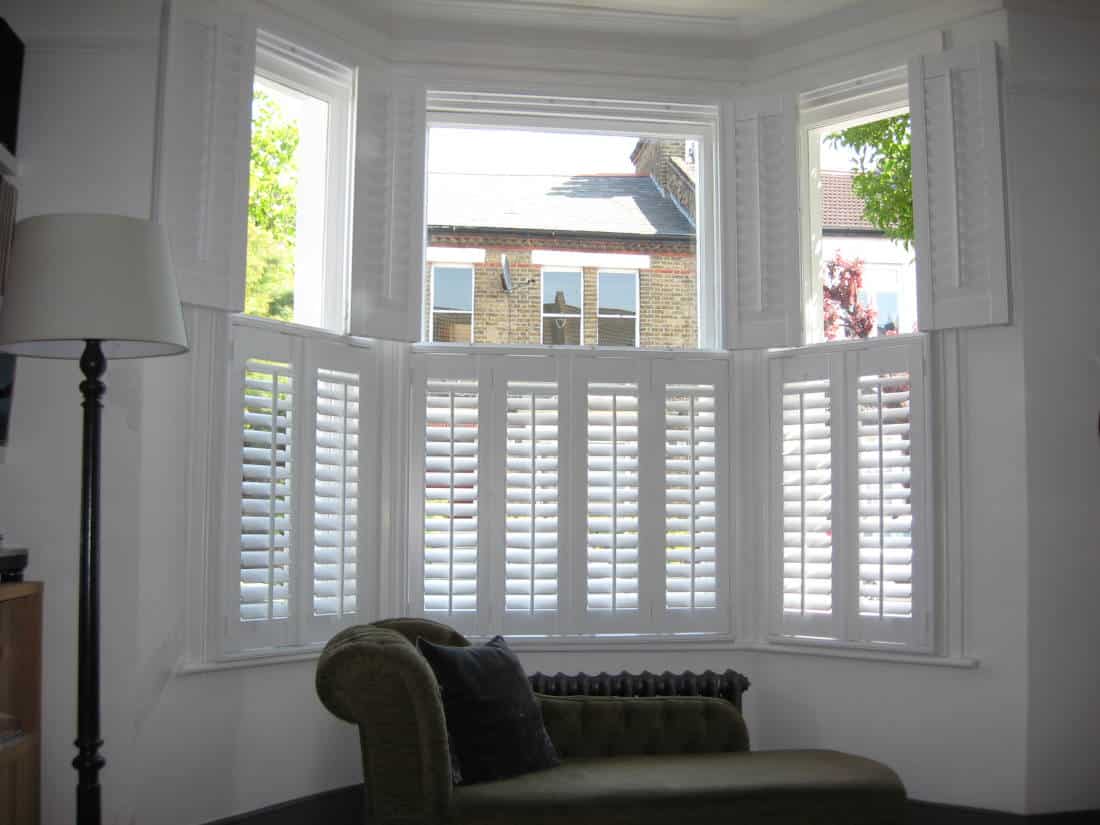
Shutters for bay windows need each angled section measured and fitted separately, with matching returns…

Internal Shutters for Windows: What to Know Before You Buy
Internal shutters are a long-lasting, low-maintenance window covering that gives you precise control over light and privacy. Before you buy, understanding shutter styles, materials, louver sizes, and mounting options saves time, money, and regret. For Brisbane homes, the right material choice matters more than most guides acknowledge.
Why Internal Shutters Are Worth Serious Consideration
Internal shutters sit in a different category to most window coverings. They are fixed to the window frame rather than hanging loosely, which gives them a built-in, architectural quality that fabric blinds and curtains rarely achieve. Close them and you get complete privacy with clean lines. Open them fully and the panels fold neatly against the wall, leaving the window completely unobstructed.

They also last significantly longer than most alternatives. A well-made set of internal shutters, professionally measured and installed, can stay in place for fifteen years or more. The running cost is low — no cords to replace, no fabric to fade, and cleaning takes seconds with a damp cloth or duster.
The upfront investment is real. Internal shutters cost more than roller blinds or curtains for the same window. But for Brisbane homeowners who treat window coverings as part of the home rather than a temporary fixture, the long-term value is strong. Shutters also add to a home’s appeal at sale time in a way that few other window treatments can match.
Shutter Styles — More Options Than Most People Realise
Most people hear “internal shutters” and think of full-height plantation shutters. Those are popular for good reason, but several other styles suit specific windows and rooms very well.
Full-height shutters cover the entire window from top to bottom in a single panel configuration. The louvers run the full height and tilt independently. This style suits most standard windows and delivers the consistent, considered look that makes shutters so appealing.
Café-style shutters cover only the bottom half of the window. The top half stays open to natural light while the lower section provides privacy from street level. This approach works well in Brisbane kitchens, street-facing dining rooms, and bathrooms where some privacy is needed without losing the light.
Tier-on-tier shutters use two independent sets of panels — one for the top half of the window and one for the bottom. Each section operates separately, giving you precise control over light and privacy at any time of day. Bedrooms that need morning light from the top while maintaining lower-level privacy suit this style particularly well.
Solid panel shutters use no louvers at all. They fold across the window and block light entirely. Less common in modern homes, they suit period-style Queenslanders and formal rooms where a traditional aesthetic is the priority.
Timber vs Composite — Choosing the Right Material for Brisbane
Material choice carries more weight in Brisbane than most shutter guides acknowledge. The subtropical climate brings high humidity, intense UV, and summer heat that affects how different shutter materials perform over time.
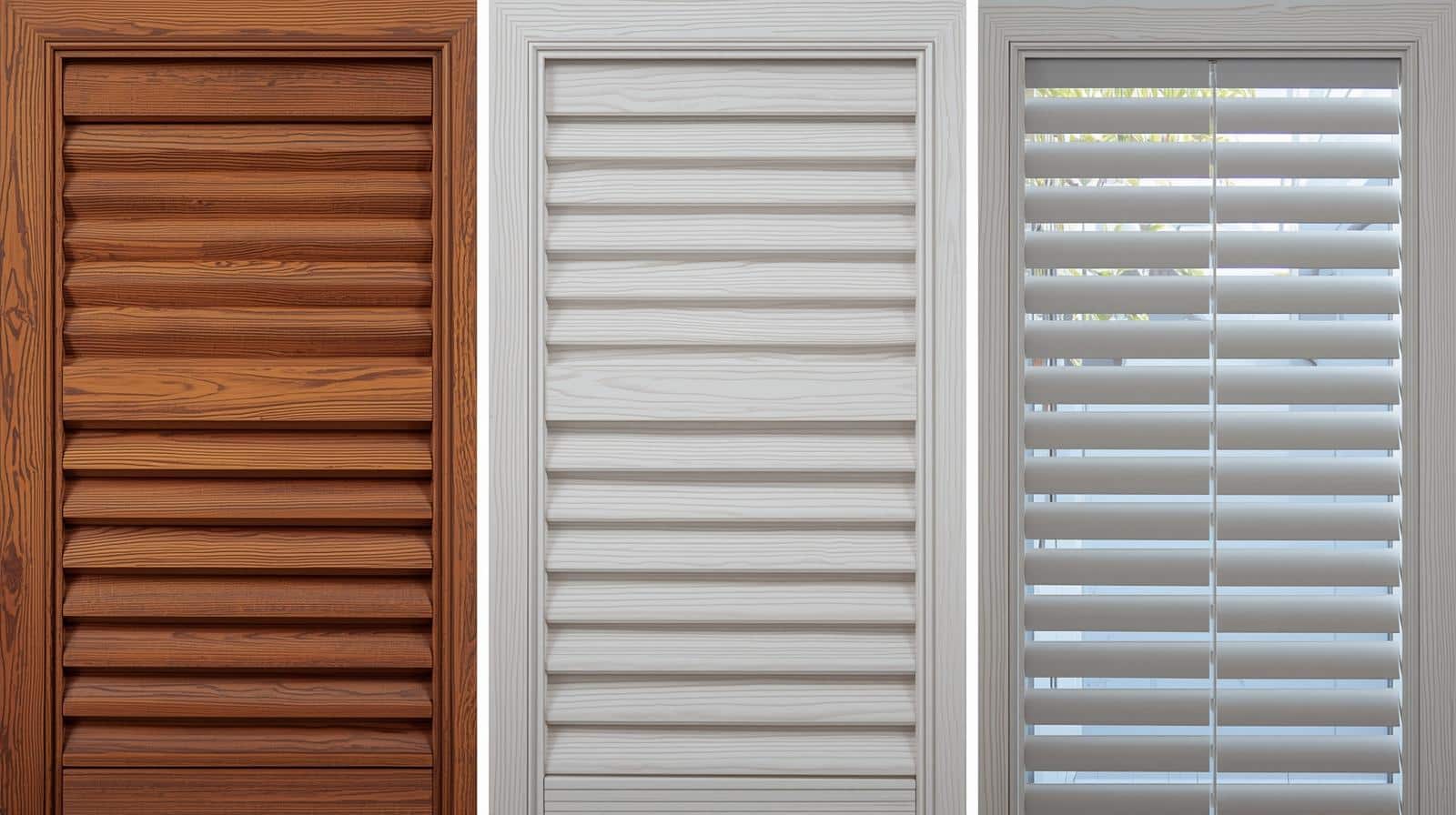
Timber shutters look exceptional. The natural grain, paint finish, and weight of real timber creates a quality that composite alternatives try to replicate but rarely match exactly. In dry, well-ventilated rooms — living areas, formal dining rooms, and bedrooms with good airflow — timber shutters perform well and age gracefully.
Brisbane’s humidity is the complication. Solid timber absorbs moisture from the air and releases it as conditions change. Over time, this cycle causes warping, swelling, and paint cracking — particularly in rooms with less airflow, close to cooking steam, or in homes with significant temperature variation between summer and winter. For rooms like bathrooms, laundries, and kitchen windows near the stove, timber is a risk that composite materials remove entirely.
Composite shutters — typically made from a PVC, ABS, or engineered polymer core — resist moisture and humidity completely. They don’t warp, crack, or swell. Quality composite shutters look very close to timber and carry finishes that hold up well under Brisbane’s UV. They are the safer material choice for Brisbane’s climate in any room where moisture or heat is a factor.
Aluminium shutters offer maximum durability and suit outdoor or semi-outdoor applications — alfresco areas, covered patios, and windows in highly exposed positions. For internal window applications, timber or composite remain the more appropriate choice aesthetically.
Louver Size — How It Changes the Look and Feel
Louver size determines how light enters the room, how much of the view is visible when the shutters are open, and how the shutter reads visually from inside and outside the home.
Smaller louvers — around 47mm to 63mm — suit traditional and period home styles. They create a more intricate, classic look and work well on narrower windows where large louvers would look disproportionate. Traditional Queenslanders and homes with detailed architraves often suit smaller louver sizes well.
Larger louvers — 89mm and above — suit contemporary homes and larger windows. When the louvers are open, the view through the window is less interrupted. The overall look is bolder and more modern. Open-plan Brisbane homes with floor-to-ceiling windows and minimal interior detailing generally suit larger louver sizes better.
The practical difference matters too. Larger louvers let more light in when tilted to a partially open position. They also require fewer louvers per panel, which means less dust accumulation and marginally easier cleaning.
Tilt Rods — Traditional or Hidden
The tilt rod is the mechanism that adjusts all louvers simultaneously. Two options exist and the choice affects both function and appearance.

A traditional centre tilt rod runs vertically down the middle of the shutter panel. It is visible from both sides and adds a classic, characteristic look. Many homeowners prefer this option on traditional and Queenslander-style homes where the tilt rod becomes part of the shutter’s design rather than something to minimise.
A hidden tilt system — sometimes called a rear or concealed tilt — removes the visible rod entirely. The louvers are connected and adjusted through a mechanism built into the back of the panel. The result is a cleaner, uninterrupted face that suits contemporary interiors and minimalist design schemes. Hidden tilt shutters read as more modern and are increasingly popular across Brisbane’s newer homes and apartment renovations.
Both systems adjust louvers equally well. The decision is purely aesthetic.
Mounting Options — Inside or Outside the Frame
How the shutter frame mounts to the window affects the finished look and requires a minimum window recess depth to execute properly.
Inside-mounted shutters sit within the window recess, flush with or slightly recessed from the face of the architrave. The result is a clean, built-in appearance that looks intentional and considered. A minimum recess depth is needed for this approach — your installer measures this as part of the consultation process.
Outside-mounted shutters fix to the wall surface around the window opening when the recess is too shallow for inside mounting. The shutters project forward from the wall. Professionally installed, this approach still looks neat, but the built-in quality of inside mounting is harder to achieve without sufficient depth.
Most Brisbane homes built in the last thirty years have sufficient recess depth for inside mounting on standard windows. Older Queenslanders vary considerably and benefit most from an in-home assessment before committing to a mounting approach. Our team at Complete Blinds Brisbane measures every window precisely — because getting the mounting right is where professional installation earns its cost.
Which Rooms Suit Internal Shutters Best?
Internal shutters work in almost every room, but they excel in specific applications.
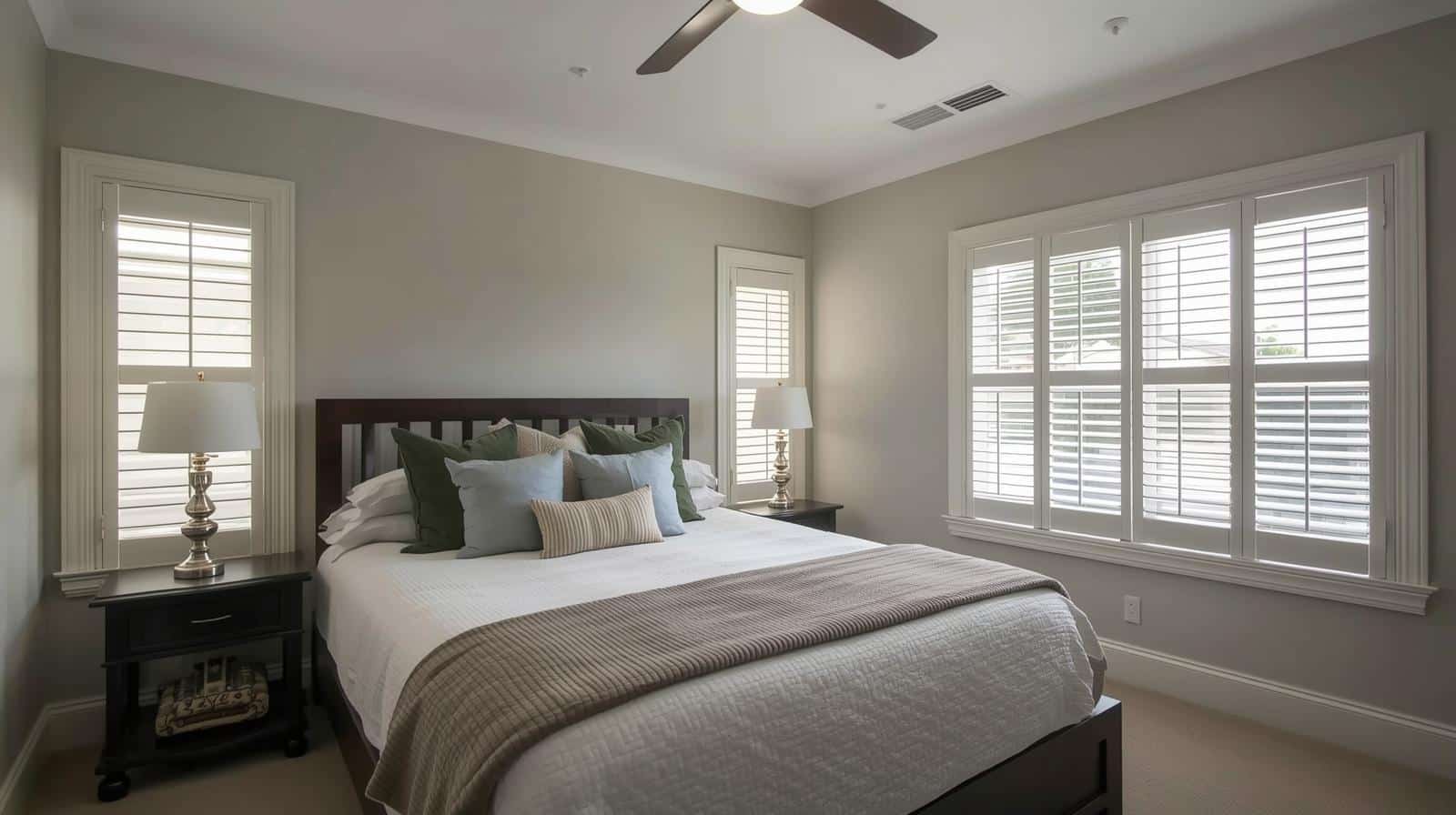
Living rooms and formal dining areas benefit from the architectural, built-in quality that shutters bring. Full-height panels on large windows make a strong visual statement. The light control at different times of day — fully open in the morning, tilted at an angle in the afternoon to cut the westerly sun — suits how these rooms are typically used.
Bedrooms suit tier-on-tier or full-height shutters with composite or timber depending on the room’s humidity exposure. The light control precision is excellent for Queensland’s early sunrises, and the lack of cords makes them a child-safe choice without any additional specification required.
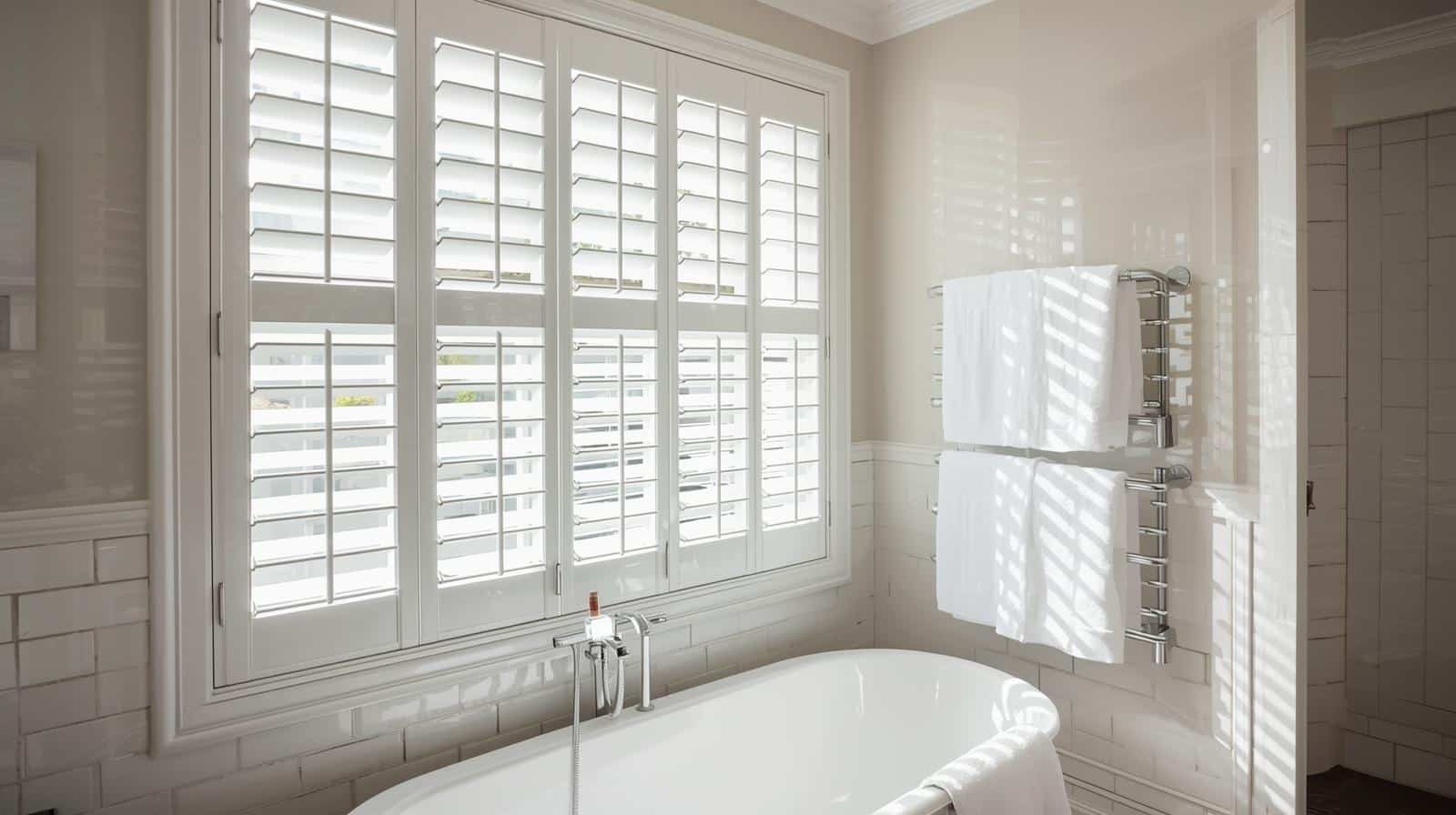
Bathrooms and wet areas should always use composite shutters. Timber in a bathroom is a maintenance problem waiting to happen in Brisbane’s humidity. Composite handles the environment without compromise and still delivers the same clean, tailored look.
Explore the full range of plantation shutters Brisbane homeowners choose most, and compare with our complete shutters range to find the right style for every room. Complete Blinds Brisbane has helped homeowners across Brisbane choose and install internal window shutters since 1989. Our own experienced team handles every measure and installation — no sub-contractors — so accuracy and finish stay consistent throughout.
Caring for Your Shutters Long Term
One of the most practical advantages of internal shutters is how little maintenance they need. A weekly wipe with a dry microfibre cloth removes dust from louvers before it builds up. A damp cloth handles any marks or smudges. No specialist cleaning products are required.
For composite shutters, cleaning is straightforward at any time. Timber shutters benefit from avoiding excessive water during cleaning — wipe rather than soak — and keeping the room well-ventilated to manage humidity exposure over time.
Check hinges and panel alignment annually. Well-installed shutters stay aligned for years, but checking occasionally means minor adjustments get made before they become noticeable problems.
Frequently Asked Questions
What is the difference between plantation shutters and internal shutters?
Plantation shutters are a style of internal shutter characterised by wide louvers — typically 63mm to 114mm. Internal shutters is the broader term that covers all shutter styles fitted inside the home, including plantation, café-style, tier-on-tier, and solid panel designs. In everyday use, the terms are often used interchangeably, but plantation shutters specifically refer to the wide-louvre style most common in Australian homes today.
Are timber or composite shutters better for Brisbane homes?
Both have a place depending on the room. Timber suits dry, well-ventilated living areas and bedrooms where humidity is controlled. Composite is the stronger choice for bathrooms, laundries, and any room with consistent heat or moisture exposure. Brisbane’s subtropical humidity makes composite the lower-risk material for most homeowners, particularly in rooms where airflow is limited.
What louver size should I choose for my windows?
Smaller louvers around 47mm to 63mm suit traditional and period-style homes, narrower windows, and rooms where a classic look is the goal. Larger louvers at 89mm and above suit contemporary homes, larger windows, and open-plan spaces. Your installer can show you samples against your actual window before you commit, which makes the decision much easier.
Can internal shutters be installed on any window shape?
Custom-made shutters can be manufactured for most window shapes — including arched, angled, louvred, and bay window configurations common in Brisbane homes. Shaped windows require precise templating and professional measurement. Standard rectangular windows are straightforward. The key is professional measurement before ordering, as shutters made to incorrect dimensions cannot be adjusted after manufacture.
How long do internal shutters last?
Well-made internal shutters professionally installed typically last fifteen years or more. Composite shutters in humid rooms can outlast timber in the same environment significantly. Regular light cleaning and annual hinge checks keep them performing well throughout their lifespan. The long service life is one of the main reasons shutters represent strong long-term value compared to fabric window coverings.

Related Posts

Comments (0)